[versión en español abajo] I write these lines in a café on Avenida Nuevo León, in Mexico City’s Colonia Condesa. Much of my childhood was spent walking these streets; in fact an early memory of mine was walking with my grandmother down Culiacán street, as I accompanied her to return a big pot to a tortillería that she had borrowed for a big party they had done at home— a rather insignificant, yet emblematic of my emotional connection to this street. A few minutes ago I stopped by a house on Calle Campeche, where at fourteen I took my first formal art class. It was the home-studio of a realist painter named Enrique Zapata. The class was for adults, and on the first session it turned out to be a nude drawing class. My mother was not pleased. I am writing across from El Péndulo, a bookstore and coffeeshop that became a key hangout in the 90s, and another place laden with meaning for me. I associate it closely with my brother, who spent a great deal of time here when he lived in the neighborhood during those years. Sitting here, I found myself thinking about the neoliberal turn in Mexico, when the implementation of the North American Free Trade Agreement reshaped the country’s economic and cultural landscape. My brother could not have cared less about economic policy, yet his life—like that of many others—was nonetheless shaped by those shifts. Among segments of the urban intellectual class, there was a sense of exhilaration tied to new forms of access: foreign goods, capital, and cultural production circulated with an intensity that had not existed before. This influx coexisted with a persistent nationalism, but also with an aspirational internationalism—reading in French or German, keeping up with foreign cinema, cultivating a cosmopolitan sensibility as a marker of sophistication. My brother inhabited that world intuitively. I, perhaps, could only perceive it from a distance. That distance came at a cost: leaving my home base, becoming unmoored in ways that, as it turned out, would be lasting. But that is connected to what I am trying to describe here. Returning to Mexico produces in me one of the most powerful emotional states I know—one that seems to occur only here. It is a form of exhilaration, even euphoria, accompanied by the deep comfort of being in the right place. Yet it is inseparable from an almost unbearable sadness: the awareness that the connections I feel so vividly are projections, activations of people, places, and worlds that no longer exist. Being with me here must be very annoying, because practically at every corner of the city I feel this compulsory need to talk about a story of something that happened there, of something that I am thinking about. Every single time I come here I come with enormous enthusiasm and with the active objective to build new memories, but it is also a battle against the countless ghosts that inevitable assail me here. I move through the city as a kind of temporal residue, perceiving layers that the present—rightly—has no obligation to acknowledge. The city is indifferent to this overlay of memory. It continues, as it must. The result is a peculiar and acute solitude. I write this in the hope that this sensation is not entirely singular—that others, at times, may recognize it. I would call it presausencia. Presausencia is a neologism in the spirit of my dear friend and mentor Felipe Ehrenberg, who was fond of them (to the point that he wanted to be called a neologist instead of an artist). But in order to make sense of it, and of my disorganized feelings of simultaneous familiarity and estrangement I feel I have to turn to authors whose life and cultural situation resonate more closely with my own, and who were able to articulate so well aspects of what I believe presausencia describes. In trying to name this sensation, I have found echoes of it in the work of Black and Chicano writers who have grappled with the instability of home and belonging. Gloria Anzaldúa writes in Borderlands/La Frontera: “I am a turtle, wherever I go I carry ‘home’ on my back.” James Baldwin, in Notes of a Native Son, offers a complementary formulation: “Perhaps home is not a place but simply an irrevocable condition.” Both gestures point toward a state in which home is no longer locatable in space, but persists as an internal, inescapable presence. In this sense, presausencia names not only the persistence of memory, but its weight: something vividly alive and intimately one’s own, yet carried rather than inhabited. What is treasured is also, at times, burdensome.
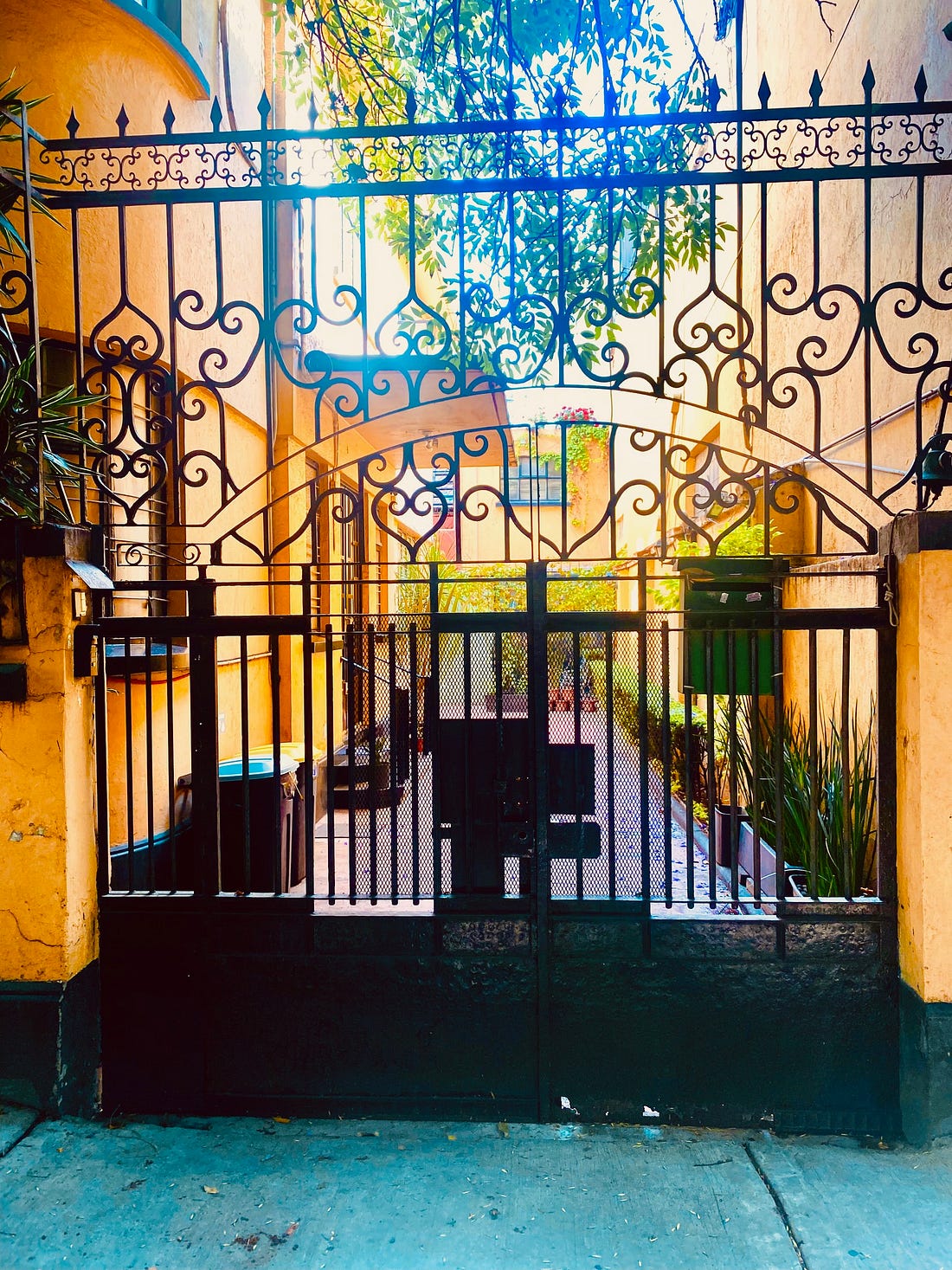
This duality does not always manifest evenly. I feel it most acutely when I walk the streets alone, when the play of light and shadow across buildings activates a cascade of personal and familial memories. The city becomes a surface onto which past lives are projected, unbidden. In the presence of others, however, that tension recedes; the melancholy gives way to a more immediate sense of belonging, even joy. In this oscillation, I am reminded of my late friend Svetlana Boym’s distinction between restorative and reflective nostalgia. What I experience is closer to the latter, yet it departs from it in one crucial way: the longing is not directed solely toward the past, but is triggered by the present itself. Homecoming becomes a kind of emotional counterpoint—a shifting interplay of exhilaration and loss, at once celebratory and elegiac. This, I would argue, is presausencia. I am not sure I have much more to say about the feeling itself, but I have been thinking about what it means to feel it. Melancholy—and even depression—is often framed as weakness or pathology. Within the success-driven narratives of social media, to admit to such states risks being perceived as a misfit, or worse, a failure. Yet this expectation feels both unrealistic and disingenuous; it obscures the fact that such emotional states are widely shared, if unevenly acknowledged. Psychologist Jonathan Rottenberg has argued that low moods are not simply dysfunctional, but can serve important cognitive functions, narrowing our attention to what matters most. In this sense, sadness can operate as a form of knowledge—as an epistemological condition. Increasingly, I find it necessary to resist the impulse to assign moral value to emotional states, as if they were virtues or defects. What is often dismissed as weakness or self-indulgence may, in fact, be clarifying. These states reveal something essential about how we inhabit the world. Perhaps this is why, when I am in Mexico, I feel I become a better artist. The country, in its presausencia, electrifies perception: a surge of sensation that is at once disorienting and generative. It is an emotional shock that heightens awareness, leaving in its wake not depletion, but a sharpened sense of purpose—particularly in language. That thought alone allows me to keep walking these streets: my aunt’s apartment on Culiacán 40, where I first learned the history of opera; La Naval de Insurgentes, once among the few places to find imported goods; the Mercado de Michoacán; the cantina Nuevo León, where my brother and I lingered over drinks that came with ample appetizers that practically constituted an entire meal; La Fonda Garufa, where I spent long afternoons with high school friends. I do not walk in order to escape these feelings, but to engage them—deliberately, even tenderly. And in doing so, even in my persistent condition of estrangement, I feel, if only momentarily, at one with the world. •••
Escribo estas líneas en un café sobre Avenida Nuevo León, en la Colonia Condesa. Gran parte de mi infancia transcurrió caminando por estas calles; de hecho, uno de mis recuerdos de infancia es caminar con mi abuela por la calle Culiacán, acompañándola a devolver una gran olla a una tortillería que había pedido prestada para una fiesta en casa—un recuerdo aparentemente insignificante, pero emblemático de mi vínculo emocional con esta calle. Hace unos minutos pasé por una casa en la calle Campeche, donde a los catorce años tomé mi primera clase formal de arte. Era el estudio-casa de un pintor académico llamado Enrique Zapata. La clase era para adultos y, en la primera sesión, resultó ser de dibujo al desnudo. A mi madre no le hizo ninguna gracia. Estoy escribiendo frente a El Péndulo, librería y café que fue un punto de encuentro clave en los años noventa, y otro lugar cargado de significado para mí. Lo asocio estrechamente con mi hermano, quien pasaba mucho tiempo aquí cuando vivía en este barrio durante esos años. Sentado aquí, me encontré pensando en el giro neoliberal de México, cuando la implementación del Tratado de Libre Comercio de América del Norte (NAFTA) transformó el paisaje económico y cultural del país. A mi hermano no le interesaban en lo más mínimo las políticas económicas, y sin embargo su vida—como la de tantos otros—estuvo inevitablemente marcada por esos cambios. Entre ciertos sectores de la clase intelectual urbana se vivía una sensación de entusiasmo ligada a nuevas formas de acceso: bienes, capital y producción cultural extranjera circulaban con una intensidad inédita. Esta apertura coexistía con un nacionalismo persistente, pero también con un internacionalismo aspiracional—leer en francés o alemán, seguir el cine extranjero, cultivar una sensibilidad cosmopolita como signo de sofisticación. Mi hermano habitaba ese mundo de manera intuitiva. Yo, en cambio, quizá solo podía percibirlo desde cierta distancia. Esa distancia tuvo un costo: abandonar mi base, quedar a la deriva de formas que, como resultó, serían duraderas. Pero eso está ligado a lo que intento describir aquí. Regresar a México produce en mí uno de los estados emocionales más intensos que conozco—uno que parece darse únicamente aquí. Es una forma de exaltación, incluso de euforia, acompañada por la profunda sensación de estar en el lugar correcto. Sin embargo, es inseparable de una tristeza casi insoportable: la conciencia de que las conexiones que siento con tanta intensidad son proyecciones, activaciones de personas, lugares y mundos que ya no existen. Estar conmigo aquí debe ser algo agotador, porque en prácticamente cada esquina siento la necesidad compulsiva de contar una historia de algo que ocurrió ahí, de algo que estoy recordando. Cada vez que regreso lo hago con enorme entusiasmo y con la intención activa de crear nuevos recuerdos, pero también es una batalla contra los innumerables fantasmas que inevitablemente me asaltan aquí. Me desplazo por la ciudad como una especie de residuo temporal, percibiendo capas que el presente—con toda razón—no tiene ninguna obligación de reconocer. La ciudad es indiferente a esta superposición de memoria. Continúa, como debe hacerlo. El resultado es una forma de soledad peculiar e intensa. Escribo esto con la esperanza de que esta sensación no sea del todo singular—que otros, en ciertos momentos, puedan reconocerla. A esto lo llamo presausencia. Presausencia es un neologismo en el espíritu de mi amigo y mentor Felipe Ehrenberg, quien era aficionado a ellos (al punto de preferir identificarse como “neólogo” en lugar de artista). Pero para poder darle sentido, y a esta sensación desordenada de familiaridad y extrañamiento simultáneos, siento que debo recurrir a autores cuyas vidas y contextos culturales resuenan más de cerca con el mío, y que han sabido articular con precisión aspectos de lo que presausencia intenta nombrar. En este intento por nombrar la sensación, he encontrado ecos en el trabajo de autores negros y chicanos que han reflexionado sobre la inestabilidad del hogar y la pertenencia. Gloria Anzaldúa escribe en Borderlands/La Frontera: “Soy una tortuga, dondequiera que voy cargo mi ‘hogar’ sobre la espalda.” James Baldwin, en Notes of a Native Son, ofrece una formulación complementaria: “Quizá el hogar no sea un lugar sino simplemente una condición irrevocable.” Ambas afirmaciones apuntan a un estado en el que el hogar ya no puede localizarse en el espacio, sino que persiste como una presencia interna, ineludible. En ese sentido, presausencia nombra no solo la persistencia de la memoria, sino también su peso: algo vívidamente vivo e íntimamente propio, pero que se carga en lugar de habitarse. Lo que se atesora es también, a veces, una carga. Esta dualidad no se manifiesta siempre de forma equilibrada. La siento con mayor intensidad cuando camino solo por las calles, cuando el juego de luces y sombras sobre los edificios activa una cascada de recuerdos personales y familiares. La ciudad se convierte en una superficie sobre la cual se proyectan vidas pasadas, sin ser convocadas. En presencia de otros, en cambio, esa tensión se disipa; la melancolía cede paso a una sensación más inmediata de pertenencia, incluso de alegría. En esta oscilación recuerdo la distinción de mi querida amiga, la ya fallecida Svetlana Boym, entre nostalgia restaurativa y nostalgia reflexiva. Lo que experimento se acerca más a esta última, pero se aparta de ella en un punto crucial: la añoranza no está dirigida únicamente hacia el pasado, sino que es detonada por el propio presente. El regreso se convierte en una especie de contrapunto emocional—una interacción cambiante entre exaltación y pérdida, simultáneamente celebratoria y elegíaca. Eso, diría, es presausencia. No estoy seguro de tener mucho más que decir sobre la sensación en sí, pero sí he estado pensando en lo que significa sentirla. La melancolía—e incluso la depresión—suele entenderse como debilidad o patología. En las narrativas de éxito de las redes sociales, admitir estos estados implica el riesgo de ser percibido como inadaptado o, peor aún, como un fracaso. Sin embargo, esta expectativa resulta tanto irreal como hipócrita; oculta el hecho de que estos estados emocionales son ampliamente compartidos, aunque no siempre reconocidos. El psicólogo Jonathan Rottenberg ha argumentado que los estados de ánimo bajos no son simplemente disfuncionales, sino que pueden cumplir funciones cognitivas importantes, estrechando nuestra atención hacia lo esencial. En ese sentido, la tristeza puede operar como una forma de conocimiento—como una condición epistemológica. Cada vez más siento la necesidad de resistir el impulso de asignar valores morales a los estados emocionales, como si fueran virtudes o defectos. Lo que suele descartarse como debilidad o autocomplacencia puede ser, en realidad, clarificador. Estos estados revelan algo fundamental sobre cómo habitamos el mundo. Quizá por eso, cuando estoy en México, siento que me convierto en un mejor artista. El país, en su presausencia, electrifica la percepción: una descarga de sensaciones que es a la vez desorientadora y generativa. Es un choque emocional que intensifica la conciencia y que, lejos de agotarme, deja como saldo una renovada sensación de propósito—especialmente en el lenguaje. Ese pensamiento es suficiente para seguir caminando estas calles: el departamento de mi tía en Culiacán 40, donde aprendí la historia de la ópera; La Naval de Insurgentes, uno de los pocos lugares donde antes de los noventa se podían conseguir productos importados; el mercado de Michoacán; la cantina Nuevo León, donde mi hermano y yo pasábamos horas y donde si uno pedía bebida le servían amplias botanas con las que uno podía básicamente comer gratis; La Fonda Garufa, donde conviví con amigos de la preparatoria. No camino para escapar de estas emociones, sino para involucrarme con ellas—de manera deliberada, incluso afectiva. Y al hacerlo, aun en mi persistente condición de extrañamiento, logro sentir, aunque sea por un instante, que soy uno con el mundo. You're currently a free subscriber to Beautiful Eccentrics. For the full experience, upgrade your subscription.
|