You are reveling in CultureWag, the best newsletter in the universe, edited by JD Heyman and written by The Avengers of Talent. We lead the conversation about culture: high, medium and deliciously low. Drop us a line about about any old thing, but especially what you want more of, at jdheyman@culturewag.com “If you aren’t reading the Wag, you’ll never get anywhere when it comes to quantum electrodynamics.” —Richard Feynman Hello, Brainiac—It's Your BookWag!Plus: New Reads from Susan Orlean, Megha Majumdar, Marisa Meltzer, Philippe Sands, Quan Barry, and More...
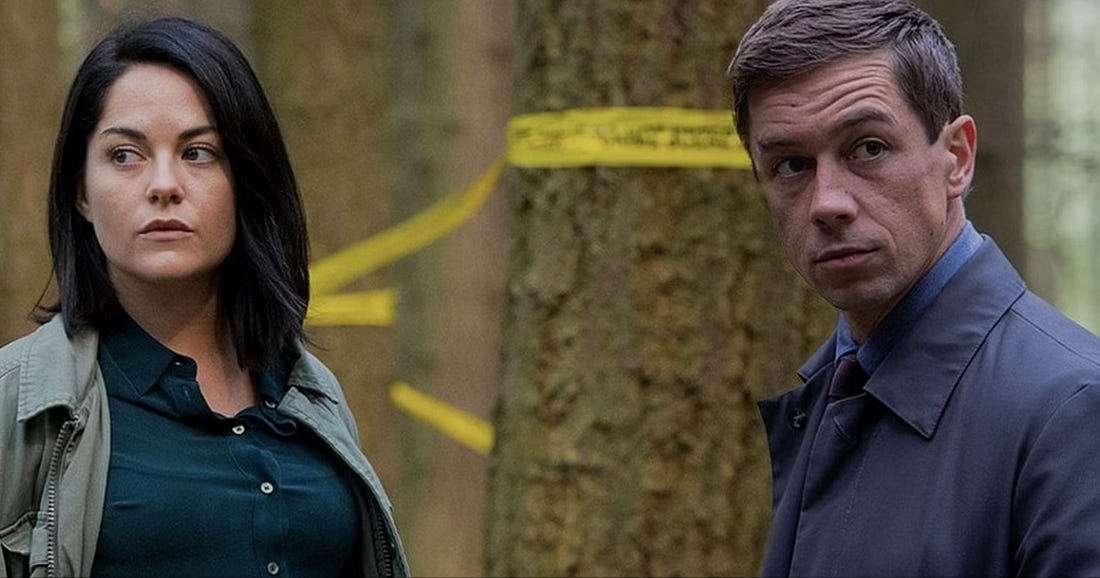
Dear Wags, Here’s another fringe benefit of the death of linear media: we are liberated from the peg. You know—the old media’s antic hunt for the thing you must watch right now. (Wait, isn’t that what we do? Move along.) Here’s the point: these days, you often stumble across an old series in the endless soup of content, and it delights you. There’s no buildup, no hype—just a pleasant surprise. That’s how we felt about Dublin Murders, a 2019 Irish procedural created by Sarah Phelps for BBC One, Starz, and RTÉ. Maybe you caught it back then and forgot it. Perhaps we did, too. All we know is that we unearthed it from a heap of BritBox procedurals on a rainy October night, and it was just the ticket. It helps that it stars two of the most underappreciated actors this side of the Liffey: Sarah Greene and Killian Scott. Greene (the surly one with the pirate eyepatch in Bad Sisters) is among the most ferocious, magnetic performers on screen today. Scott, who’s been in loads of things you’ve almost certainly missed, is as good a Killian—or Cillian—as there is (pending a SAG exemption). In this mossy number, adapted from Tana French’s Dublin Murder Squad novels, they play a pair of deeply complicated detectives mired in dueling mysteries. That’s a bit of a problem, because Phelps mashed together two French books—In the Woods and The Likeness—into one cockamamie story. No bad ideas in a brainstorm! Here’s the thing about French: the American-Irish thriller queen is a wizard at glum, creepy atmosphere, but her plots are pure malarkey. (The Likeness, for instance, is the silliest take on doppelgängers since The Patty Duke Show.) You just have to put on an Aran sweater and go with it. Life, after all, is full of coincidences and blunt-force trauma on a small, damp island in the North Atlantic. Dublin Murders goes off-kilter at least seventy-five times—especially when it comes to Greene’s storyline—but oh, how you wish you could go for a pint with these shades. They’re dark, brooding Celts with darker secrets. Wade through the boggy middle to reach the twist, and you’ll get a satisfying shudder. The supporting cast (Conleth Hill, Moe Dunford, Leah McNamara) is grand. And while Dublin Murders looks destined to remain a one-and-done number, that’s fine by us. We’re simply happy to have plucked it from the pile and gotten a jolt. A reminder: not all TV has to be great TV. It just has to be acted as if it were. Yours Ever,
Dublin Murders streams on BritBox.
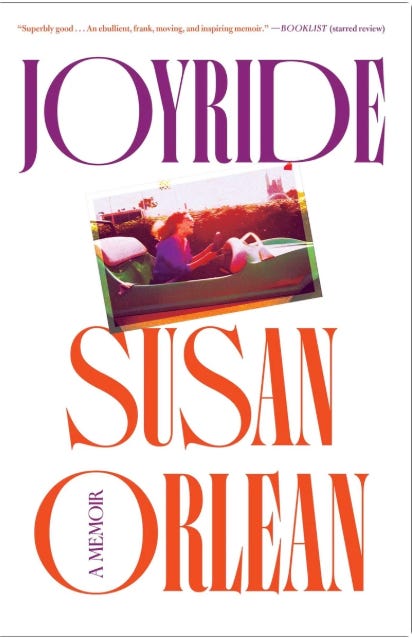
Joyride by Susan Orlean A long time ago, when Susan Orlean published The Orchid Thief, we chatted with her about curiosity. She was simply bursting with it: Why, for instance, did garbage collectors tie abandoned teddy bears to the fronts of their trucks? Surely there was a story there—a strange and beautiful one—filled with the eccentric characters that populate her work. That passion for uncovering what she calls “hidden worlds” made Orlean a great journalist, and her new memoir serves as an origin story. She grew up a bookworm in Shaker Heights, a leafy frontline in the struggle for integration. After graduating from the University of Michigan, she launched herself into the world of alternative weeklies and, from there, became one of the last famous magazine writers—spinning long-form features that unearthed curiosities hiding in plain sight. She spelunked into the mind of a 10-year-old boy, surfed with women chasing waves, and tracked down a rabbit-borne virus, among countless other adventures. Her recollections of that remarkable run—along with personal setbacks and Hollywood detours—are, of course, sharply written and wry. But they’re also bittersweet, because the world that recognized her genius no longer exists. Leave it to Orlean to bring it vividly back to life. —Elena Richardson
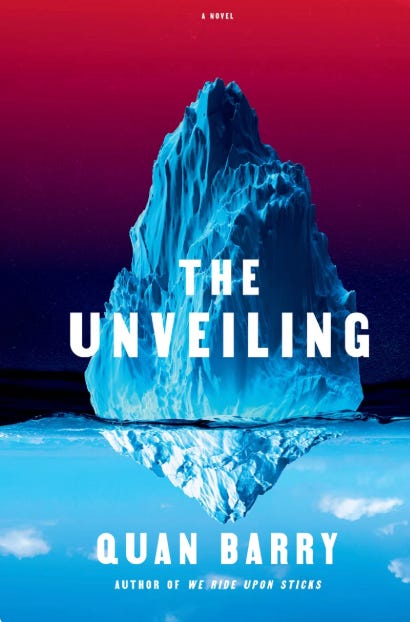
The Unveiling by Quan Barry We have a rule about cruises: don’t walk up the gangplank. Barry (We Ride Upon Sticks) ratifies that opinion in this literary horror story about a voyage that’s most definitely damned. Striker, a film scout, is scouting locations for a movie about the ill-fated Shackleton expedition when she joins a luxury Antarctic cruise filled with wealthy tourists. A Black woman raised by adoptive white parents, she finds the social ecosystem aboard ship as fascinating—and treacherous—as the wildlife in the polar seas. When a kayaking excursion and lecture tour go horribly wrong, the group is marooned on a desolate island riddled with lethal hazards. As the facades of her fellow passengers begin to melt along with the ice cap, things get truly hairy. Are the survivors committing unspeakable acts in the blank white wilderness—or is the mayhem unfolding entirely in Striker’s mind? The metaphor for race relations is baked into a supremely chilling adventure story. —Georgina Wilson
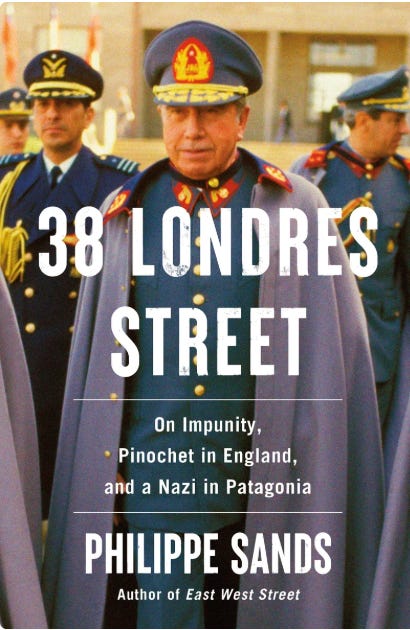
38 Londres Street by Philippe Sands During Chile’s military dictatorship, the title address was home to Augusto Pinochet’s secret police, who turned the former headquarters of the country’s Socialist Party into a torture chamber. Brought to power through the 1973 coup against leftist president Salvador Allende—abetted by Henry Kissinger and the CIA—Pinochet’s regime was responsible for the deaths or disappearances of around 3,000 people, though the exact toll may never be known. Sands’s treatment of this dirty war traces its evils back to Nazi Germany through the figure of Walther Rauff, an SS officer who helped devise mobile gas chambers during the Holocaust. After the war, Rauff—like other Nazi fugitives—escaped to South America, where he offered his services to the Chilean junta. When Chile returned to democracy, Pinochet managed to retain much of his power. But in 1998, while recovering from back surgery in London, he was arrested on a Spanish warrant charging him with crimes against humanity. The trials that followed exposed not only the brutality of his rule but also his regime’s chilling ties to the Nazi network that had taken root in South America. Sands’s investigation reads like a thriller. The horror, of course, is that the villains were real. —Paulina Salas
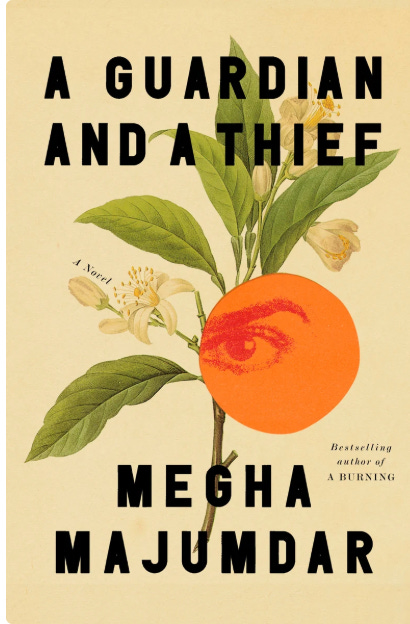
A Guardian and a Thief by Megha Majumdar Majumdar’s novel unfolds in a near-future Kolkata, a city ravaged by climate change and wracked by food shortages. Ma is desperate to escape this dystopia with her elderly father and young daughter. Her dream is to join her scientist husband in Ann Arbor—but on the day the family is set to leave for America, their passports are stolen. The thief is Boomba, a young resident of the shelter Ma runs with funds from a billionaire donor. He, too, is trying to get his loved ones out of Kolkata. By grabbing Ma’s purse, he sets in motion a chain of events that brings both families to the brink. In the end, Majumdar reminds us that environmental catastrophes are always human ones. This is a suspenseful story of love and duty—and a harrowing dispatch from a planet in crisis. —Rukmini Bose
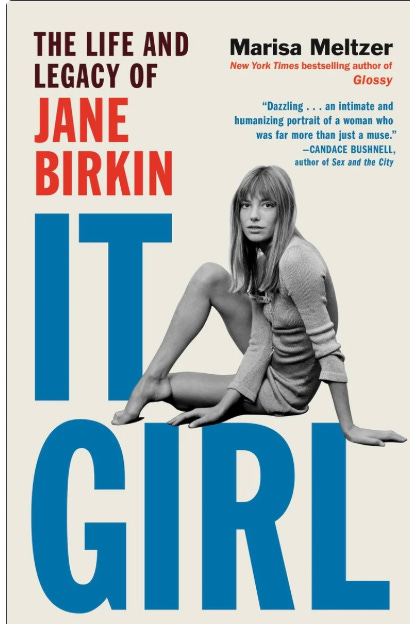
It Girl by Marisa Meltzer Jane Birkin is probably most famous for lending her name to the queen of handbags. But the Anglo-French movie star was far more than a very pricey accessory. Birkin, who died in 2023, was one of those mid-century girls of the moment—a free-spirited English gamine who seemed to sum up the mood of the Swinging Sixties. While still in her teens, she married John Barry, the composer of the James Bond scores, and by 20 had appeared in Michelangelo Antonioni’s trippy 1966 classic Blow-Up. That first marriage ended in 1967, and Birkin, a young mother to her daughter Kate, headed to Paris, where she began her storied relationship with the dissolute singer-songwriter Serge Gainsbourg. Together they recorded the scandalous hit “Je t’aime… moi non plus,” in which Birkin breathily simulated an orgasm. From that entanglement came her second daughter, the actress and singer Charlotte Gainsbourg. In the meantime, Birkin became what is tiresomely referred to as a fashion icon—though in her case, the title was earned. Her blend of English eccentricity and Parisian chic made her the darling of glossy magazine editors on both sides of the Atlantic. Meltzer gives Birkin’s knack for looking fabulous in old jeans or a skirt the size of a postage stamp its due, but she was far more than a lanky clothes horse. As an actress, she worked with France’s best directors, including Agnès Varda, Patrice Leconte, Jacques Rivette, and Jacques Doillon, her partner after Gainsbourg and father of her daughter Lou. She also found success as a singer and director, and became a feminist and AIDS activist. Her European fame was never equaled in Hollywood—though she did appear in the 1978 version of Death on the Nile—but she became a great star of French cinema. More than that, Meltzer’s book establishes that she was not simply a figure of great style, but a woman of substance. —Sabine Paultre Questions or suggestions? Ping intern@culturewag.com and we’ll get back to you in a jiffy. CultureWag celebrates culture—high, medium, and deliciously low. We cut through the clutter to deliver smart, funny recommendations to the most hooked-in audience in the galaxy. If someone forwarded you this issue, consider it your coveted invitation—now RSVP “Subscribe.” You’ll join the sharpest set in Montevideo, Gstaad, Biarritz, and at Oy Bar in Studio City, where Jeff Strauss serves up the most surprising seasonal menu in Los Angeles. The menu always delights, but if Jeff’s making soft shell crab sandwiches, do not hesitate.
After all, tomorrow is another Wag. —Margaret Mitchell
Invite your friends and earn rewardsIf you enjoy CultureWag, share it with your friends and earn rewards when they subscribe.
|