

Ticker Reports for March 11th
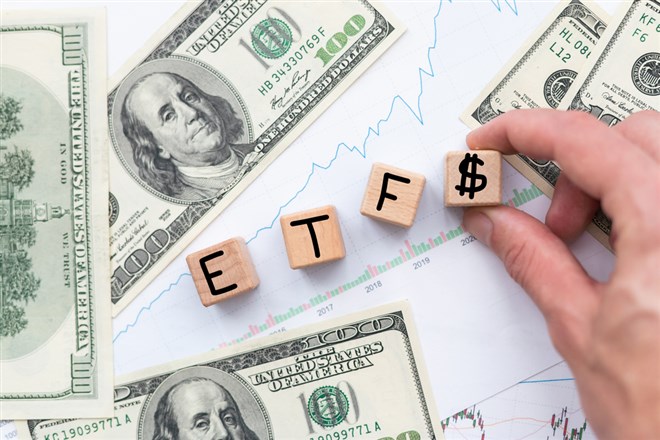
5 ETFs Poised to Spring Ahead in the Second Quarter
Exchange-traded funds (ETFs) offer diversification benefits without the need to select individual stocks. Many track indexes like the S&P 500, providing investors with broad market exposure through a single investment.
However, diversification during times of market volatility means looking at funds that go beyond the S&P 500. This could include, for example, precious metals, bonds, and international stocks.
Investing in these sectors may seem scary to investors with a low-risk tolerance. But that’s another benefit of ETFs. By owning a basket of stocks, investors are shielded from the risk of being too concentrated on one individual stock.
With thousands of ETFs available, narrowing down the options can be challenging. This article highlights five thematic ETFs well-suited for current market conditions, offering strong performance and low fees.
Don’t Just Own the S&P 500, Beat It
If you're looking for a set-it-and-forget-it ETF that lets you sleep soundly at night, the iShares Core S&P ETF (NYSEARCA: IVV) is a top choice comparable to the SPDR S&P 500 ETF Trust (NYSEARCA: SPY), which is considered a bellwether among S&P 500 ETFs.
The IVV fund is indexed to the S&P 500. Since 1950, the index has delivered an overall average return of 12%.
In the last 10 years, the IVV ETF has delivered a total return of 232.18%, nearly double the historical average and slightly better than the SPY.
As of March 2025, over 30% of the fund’s weighting was in technology stocks, with each of the Magnificent 7 stocks being among the fund’s top 10 by weight.
When the S&P 500 Isn’t Enough
A fund that tracks the S&P 500 can serve as a good proxy for the stock market.
However, it could leave some gaps and concentrate exposure in areas like technology stocks. A total market fund is an alternative that works for many investors.
The Vanguard Total Stock Market ETF (NYSEARCA: VTI) is a passively managed fund that tracks the MSCI US Broad Market Index, which covers 99.5% or more of the total market capitalization of all U.S. common stocks.
An interesting point to note is that over the last 10 years, owning VTI would have delivered a total return similar to IVV (211.73% vs. 232.18%), all with an ultra-low expense ratio of 0.03%.
A Fund That Ensures You Pay Yourself First
The Vanguard Dividend Appreciation ETF (NYSEARCA: VIG) is a passively managed fund that tracks an index of dividend-paying companies.
These funds are typically attractive to retirees who are looking for income-producing investments.
However, dividend stocks are looking attractive, as many growth stocks are underperforming the market. The VIG lets investors get dividend exposure without selecting individual stocks.
The VIG ETF was up 11% in the 12 months ending March 7, 2025.
Over the last five years, the fund has delivered a total return (stock price appreciation + dividends) of 84.98%. The fund pays an annual dividend of $2.97 per share.
A Safe Landing for a Flight to Safety
Having a diversified portfolio generally means owning different asset classes, such as stocks and bonds.
Bond funds can provide a safe landing for investors looking to park some capital after taking profits from volatile stocks.
The pick here is the iShares 20+ Year Treasury Bond ETF (NASDAQ: TLT). The benefit of tracking long-term bonds is that these funds are most sensitive to changes in interest rates.
Although investors may not be getting as many interest rate cuts as they hoped for in 2025, the next directional move is almost assuredly lower.
That flight to safety seems to already be underway. The TLT ETF is up about 4% in 2025, and it could move higher when the Federal Reserve begins to cut rates, probably starting sometime this summer. Investors get that performance with a low expense ratio of just 0.15%.
Last Year’s Golden Opportunity Is Still in Place
Gold was one of the top-performing asset classes in 2024.
And with a mining company like Barrick Gold Corp. (NYSE: GOLD) announcing a large share buyback program, there’s good reason to believe that gold is on track for another strong year.
The SPDR Gold Shares ETF (NYSEARCA: GLD) allows investors to gain exposure to the sector without holding physical metal or investing in mining stocks.
Through March 7, 2025, the GLD ETF is up 11.3%, which closely matches the fund’s five-year average annual growth of 11.5%. Investors can get the funds with an expense ratio of just 0.40%.

Quick setup: New indicator link (5-min install)
I just unlocked access to 2025's hottest new trading indicator for MarketBeat subscribers only.
It's like having your own trading butler… working tirelessly in the background… sending unlimited automatic alerts straight to your phone.
It installs in less than 5 minutes, so you can start receiving alerts TODAY...
The only "catch" is that we are limiting signups and your access may be revoked without warning.

3 Stocks With Sky-High Buyback Yields Over the Last 12 Months
When it comes to stock buybacks, announcements of new repurchase programs are important to stay aware of. However, announcing a share repurchase program is very different from actually buying back shares. Unlike dividends, when a company announces a share repurchase program, it is not obligated to actually execute it. This is one reason many companies prefer to return capital to shareholders using buybacks rather than dividends. It gives them added flexibility in how they can use the cash on their balance sheets.
Noticing if companies use their buyback capacity is as important as noticing their buyback announcements. One simple and easy metric that measures to what extent a company is buying back shares is the buyback yield. It measures the total value of shares repurchased over a period in relation to a company’s current market capitalization. Below, I’ll look at three stocks that have a strong buyback yield of 10% or more over the past 12 months. This indicates that they have bought back a large amount of shares, providing a significant tailwind to their earnings per share (EPS).
eBay Bids Big on Buybacks With $3.3 Billion Spent
E-commerce giant eBay (NASDAQ: EBAY) has had a robust buyback yield of 10% over the last 12 months. The company has spent over $3.3 billion on buybacks over that period, significantly reducing its outstanding share count. Although this is impressive compared to the less than 2% buyback yield of the S&P 500 Index over the period, it is actually below average for the firm. Over the past 10 years, eBay has shown a consistent commitment to returning capital through buybacks, with an average buyback yield of 12%.
The company’s 12-month buyback pace has been on a steady rise since mid-2023. However, this $3.3 billion clip is still well below the $8 billion peak it reached in Q1 2022. The company also has an above-market indicated dividend yield of 1.6% as of the Mar. 7 close. It recently announced a 7% increase in its quarterly dividend. Its indicated yield is moderately above the 1.2% indicated yield of the S&P 500. Overall, eBay shares have provided an impressive total return over the past 52 weeks of nearly 42%.
Etsy’s 16% Buyback Yield: Smart Move or Missed Opportunity?
Etsy (NASDAQ: ETSY), a significantly smaller e-commerce player compared to eBay, happens to have a significantly higher buyback yield. Its nearly 16% buyback yield over the last 12 months puts it in the top 10 for this metric among mid-cap or larger U.S. stocks. Unfortunately for Etsy, its high level of buybacks hasn’t kept shares from falling. The stock is down nearly 32% over the past 52 weeks as of the Mar. 7 close. During the pandemic, this stock sprang onto the scene, seeing its value nearly 10x from Mar. 2020 to Nov. 2021. Etsy saw several quarters of revenue growth that were over 100%. However, last quarter, revenues grew by barely 1%.
Despite its slow growth, Etsy is in a strong cash position, giving it the ability to buy back shares. It has over $1 billion in cash and generated $315 million in cash from operations last quarter. Given its slow growth, it's worth considering if Etsy is an example of when buybacks are not a good thing. When companies buy back shares, that means they are not investing that cash back into the business. More investment back into the business may have accelerated revenue growth, which may have had a stronger impact on shares. However, Etsy may view its stock as significantly undervalued, making buybacks a strategic use of cash. The company continues investing in product discovery and user experience but may require a more favorable macroeconomic environment for these efforts to yield meaningful returns.
Marathon Petroleum: Helping Fuel Returns With a 21% Buyback Yield
Marathon Petroleum (NYSE: MPC) has been incredibly willing to return capital using buybacks. Its buyback yield of over 21% through the last 12 months is the highest among all U.S. large-cap stocks. While valued at $43 billion, the company has spent $9 billion on buybacks.
Its commitment to returning capital is further displayed by its also strong indicated dividend yield of 2.7%.
The company has shown this strong commitment, particularly over the past three years. Its average 12-month buyback yield over that period was 19%.
Despite being down 21% over the past 52 weeks, the stock has provided a strong total return of over 89% over the past three years.
How this 3-cent coin is going to outperform Bitcoin
Chris Rowe – the man who recommended Amazon in 1998… Bitcoin and Ethereum in 2017…
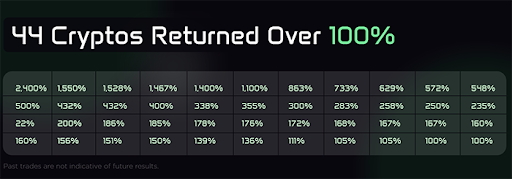
And has spotted 44 different coins that have returned over 100%...
But today, Chris is now making the biggest crypto call of his ENTIRE career…

3 Stocks Investing $650 Billion in the U.S.—Should You Invest?
Many big companies have been announcing massive new investments in the U.S. Some of these investments are clearly due to tariffs and threats of tariffs made by President Trump. Others are largely independent of this.
Below is an analysis of several announcements outlining these firms' plans for the funds and the potential impact of tariffs. Together, these investments total over $650 billion going to the United States.
AAPL: Committing $500 Billion, But Trump’s Impact Is Obvious
On Feb. 24, the world’s largest company, Apple (NASDAQ: AAPL), announced it would be investing $500 billion in the United States over the next four years. One thing that is important to understand about this announcement is that Apple is not moving more iPhone production into the United States. However, there is evidence that tariffs influenced this decision.
Apple manufactures much of its hardware in China because it can employ low-wage workers. Due to Trump’s 20% tariffs on China, it may seem logical to conclude that the company is now relocating these operations to the United States. However, these tariffs don’t really change Apple's calculus when it comes to considering building these products in the U.S.
The company is likely saving much more than 20% by having these items made in China. Foxconn is the company that puts iPhones together. In 2023, the hourly wage of a Foxconn worker was less than $3. That is less than half the federal minimum wage in the United States of $7.25. Additionally, Apple would likely need to pay much more than that per hour to have its products assembled by Americans.
Apple directly addressed what this investment will go toward. A part of the investment will go toward building an “advanced manufacturing facility” in Houston, Texas. This facility will make AI servers that the company will use to power its Apple Intelligence offering. This is Apple’s AI technology that it has begun integrating into iPhones. Much of the computing power for this will be cloud-based, creating a need for advanced servers that can run its AI workloads.
Still, the company notes that these servers were previously made outside the United States, indicating that tariff threats had something to do with this shift. It is also possible that Apple made this move in a bid to gain an exemption on Chinese tariffs for iPhones. In 2019, the company was able to do just that.
TSMC: Tariffs Send $100 Billion to the Desert
One company’s investment was much more clearly influenced by Trump's tariff threats: Taiwan Semiconductor Manufacturing (NYSE: TSM).
Trump has threatened to impose 25% tariffs on foreign-made semiconductors; however, he hasn’t revealed a timeline for when this might happen.
Now, TSMC is investing billions to build five new manufacturing facilities in Arizona over the coming years.
Trump mentioned multiple times in his joint press conference with the TSMC Chief Executive Officer, CC Wei, that the company made this move to avoid tariffs.
However, the President has reportedly not ruled out imposing tariffs on Taiwanese chips. It's key to note that TSMC's commitment may change if circumstances turn against it.
SRE: “Remarkable” Opportunities Sending at Least $52 Billion to the U.S.
Utilities company Sempra (NYSE: SRE) has announced a massive capital plan of $56 billion through 2029. Sempra has some operations in Mexico, although the majority of its earnings come from Texas and California.
The company did not mention new tariffs during its earnings call when it announced this plan, and there is little evidence that tariffs influenced it.
The company is shifting more of its focus to the U.S. It will put at least 93% of its planned capital investment into its operations there. The Sempra Infrastructure segment houses its Mexican operations, and it will receive 7% of the spending.
However, this segment also includes U.S. operations, so some of that will also go to the United States. Overall, Sempra plans to send at least $52 billion to California and Texas.
In 2024, nearly 22% of the company’s adjusted earnings came from Sempra Infrastructure. So, the fact that just 7% over the next five years will go toward this part of the business shows how the company wants to shift more to the United States.
The firm says this is due largely to “remarkable” investment opportunities in Texas.

MarketBeat Media, LLC dba TickerReport
345 N Reid Place, Suite 620, Sioux Falls, SD 57103.