Why the Paramount-WB Merger Will Be Terrible for TheatersPlus: It’s ‘Odyssey’ Week! Get your Nolan on.
Hey, a quick programming note before we get started: I’m going to be doing a live chat all about Christopher Nolan on The Bulwark’s Substack page at 2 p.m. Eastern this coming Monday. We can discuss what you think about his latest, The Odyssey, debate which of his films is the best and which is least-best (none of them are bad), or just laugh at some of the idiotic controversies that have swirled around his films over the years. Click this link to join on Monday. In the meantime, hop in the comments here and let me know if you made it out to the big movie this week . . . and what format you saw it in. So many formats, so little time. The live chat is just for Bulwark+ members—so if you’re not already a member, now’s a great time to sign up. Our members make possible our growing coverage of movies, books, arts, and culture here at The Bulwark. We make most of that content available for free—like Alyssa Rosenberg’s great breakdown of two new books about The Odyssey—so signing up to partake in the chat will help keep such efforts sustainable.
World Ends, Movie Theaters Hardest HitIt’s nice to have a big new movie in theaters like The Odyssey, because the buzz at the multiplex and in the online chatter is palpable. Folks are excited and that excitement carries over for months to come. Nothing helps sell movies like a big movie: People see trailers, they get excited for future films, and the cycle repeats. Enjoy it while it lasts! If there’s one refrain from the latest rounds of legal filings and public statements, it’s that the Paramount–Warner Bros. Discovery merger is likely to result in the closure of some number of them. It is, I think, noteworthy that, in their filing asking for an injunction delaying the merger, California’s Rob Bonta and the other state AGs led the list of victims thus: “This proposed $110 billion merger, the largest in Hollywood history, would extinguish competition between Paramount and Warner Bros. and inflict substantial harm on movie theatres, basic cable distributors, and, ultimately, audiences nationwide.”¹ Not the workers of these companies, or the shareholders, but the theaters. Here’s the basic reasoning:
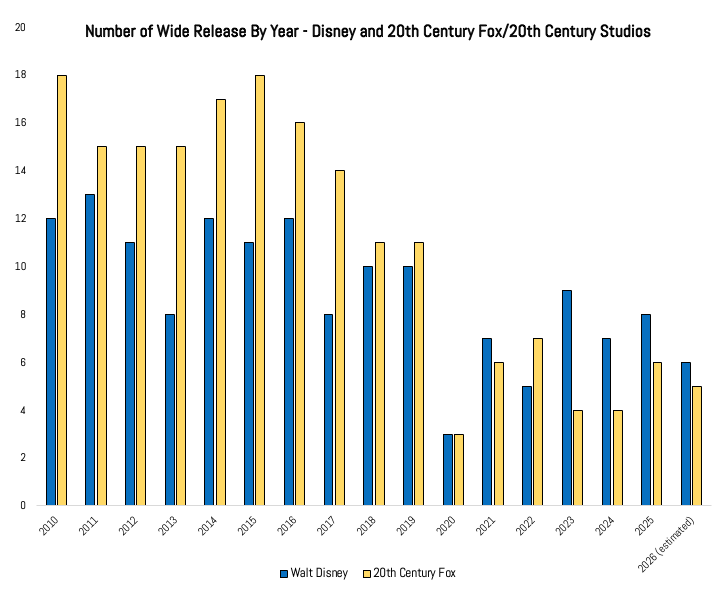
How fierce that competition truly is can be debated; the number of distributors and major releases have dwindled enough that theater owners are often forced to just take what they can get. And certain studios have amassed enough power at times to force drastically unfavorable terms, as when Disney was taking upwards of 70 percent of grosses and requiring extended runs of Marvel Cinematic Universe films on their biggest screens regardless of how well they were playing. Theaters have been in a precarious position ever since the pandemic shutdowns, which were followed by a calamitous dual writers and actors strike that stifled the production lines and kept movies from flowing back into theaters in a timely fashion. And all this was preceded by the merger of Disney and 20th Century Fox, which had a disastrous impact on the overall number of movies released:
This is why the head of the theatrical trade group Cinema United, Michael O’Leary, was pretty blunt earlier this year on the question of a merger: “If Paramount buys Warner Bros. and production drops, there’s no question that theaters will close.” To assuage these concerns, David Ellison has insisted that Warner Bros. and Paramount will combine to release thirty movies a year. They swear it! Pinky promise! And maybe they will. Stranger things have happened, I suppose. But the simple truth is that we have no reason to believe him and every reason from examining the history of studio mergers to believe that’s unlikely to happen. This promise is what regulators refer to as a “behavioral remedy” (as opposed to a “structural remedy,” like a divestiture). And if Paramount-Skydance doesn’t hold to that promise? Well, there’s not a whole lot that can be done about it, as Bonta told Matt Belloni on “The Town” this week: “Behavioral remedies just are tough to realize. And even in [the] Ticketmaster [merger with] Live Nation, there were behavioral remedies in that case, in a consent decree from years ago, and we ended up in court with them again for violation of antitrust law, and won on every single question posed to the jury.” Look, I’m not a lawyer and I’m not an expert in antitrust law; I’m a humble film critic who loves going to the movie theater. I can accept that blocking this merger at the state level is pretty unlikely. But I don’t think any of us should pretend that the merger won’t have consequences for the movie business writ large, some of them quite deleterious. Review: Christopher Nolan’s The Odyssey
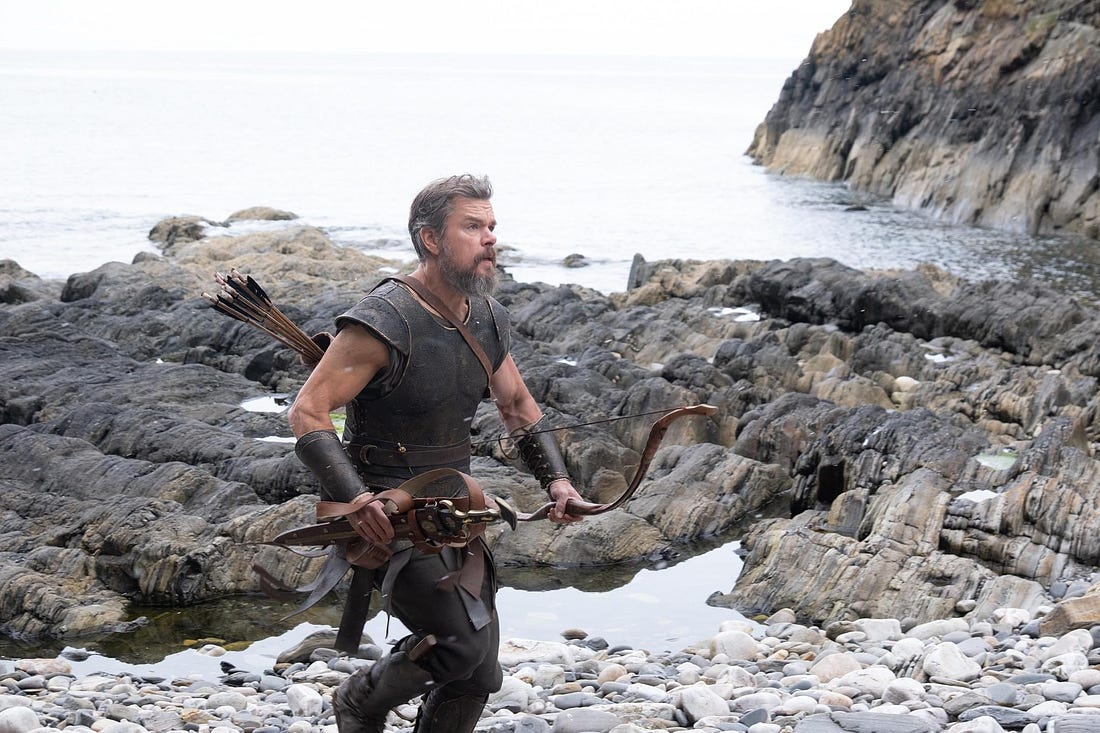
SPEAKING OF THEATERS, The Odyssey is out now and playing in about fifty different formats. For starters, there are IMAX, 70mm, and 70mm IMAX, which are, believe it or not, three entirely distinct formats. Amazing stuff. I saw it in IMAX at the press screening and attempted to place it within Nolan’s broader body of work:
Look, I don’t want to freak anyone out, but our greatest pop filmmaker has become obsessed with an onrushing apocalypse. Whether or not this has anything to do with the existential threat faced by his beloved theaters, well, I leave to you to determine. Read the whole thing here.
1
Emphasis mine. British spelling of “theaters” theirs. You’re a free subscriber to The Bulwark—the largest pro-democracy news and analysis bundle on Substack. For unfettered access to all our newsletters and to access ad-free and member-only shows, become a paying subscriber.We’re going to send you a lot of content—newsletters and alerts for shows so you can read and watch on your schedule. Don’t care for so much email? You can update your personal email preferences as often as you like. To update the list of newsletters or alerts you received from The Bulwark, click here. Having trouble with something related to your account? Check out our constantly-updated FAQ, which likely has an answer for you.
|