From Masthishka Maranam To June, Ranking Rajisha Vijayan’s 5 Best Performances
|
What has consistently set Rajisha apart is her instinct for roles — ones that oscillate between grounded, small-town realities and heightened, performative spaces. Neelima Menon writes.
|
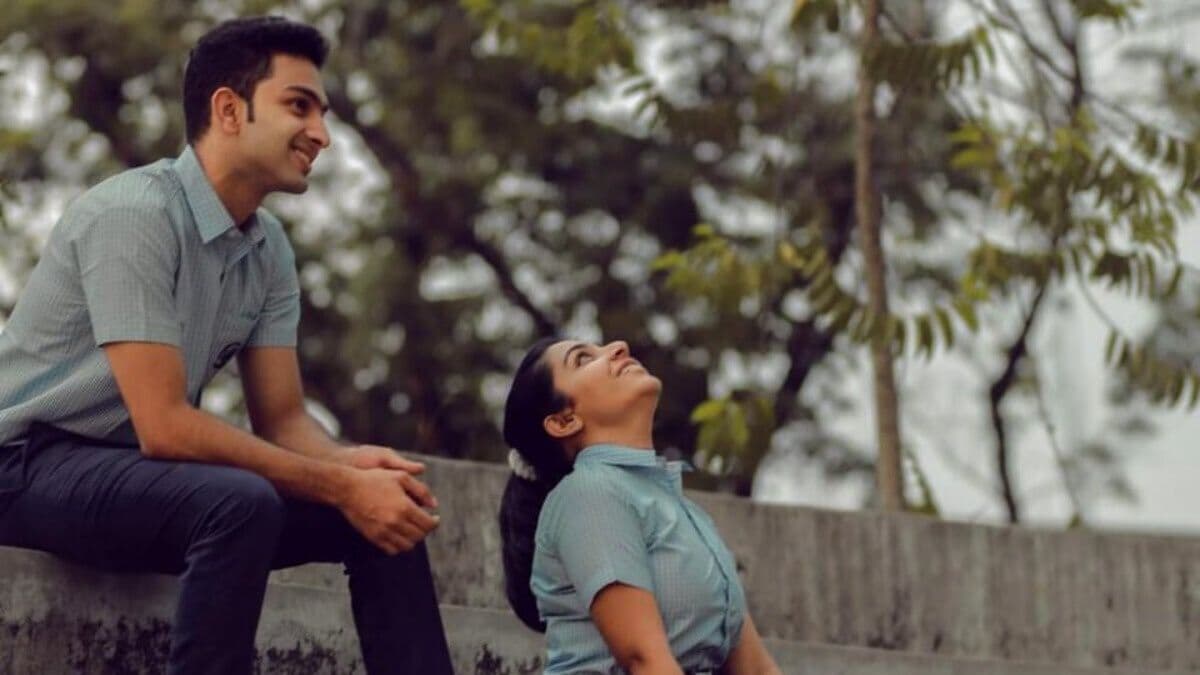
WITH HER PERFORMANCE IN Masthishka Maranam garnering praise, Rajisha Vijayan continues to stand out for the choices she makes as an actor. While she may not always be positioned as a conventional box office draw, what has consistently set her apart is her instinct for roles — ones that oscillate between grounded, small-town realities and heightened, performative spaces. This ranking looks at her performances through that spectrum, favouring the ones where her emotional precision and lived-in authenticity come to the fore, while also taking note of the instances where excess or writing holds her back. 1. June For an actor, few tasks can be as tricky (apart from portraying a real-life figure) as playing someone across different stages of life. Because it requires more than just cosmetic shifts; your body language should change, your voice requires you to find new rhythms, and the emotional registers should also quietly evolve. In Ahmed Kabir’s June, Rajisha Vijayan spends a large portion of the film inhabiting an irrepressible teenager caught in the messy in-betweens of adolescence, filled with fleeting crushes, parental boundaries and emotions she herself is unable to process. |
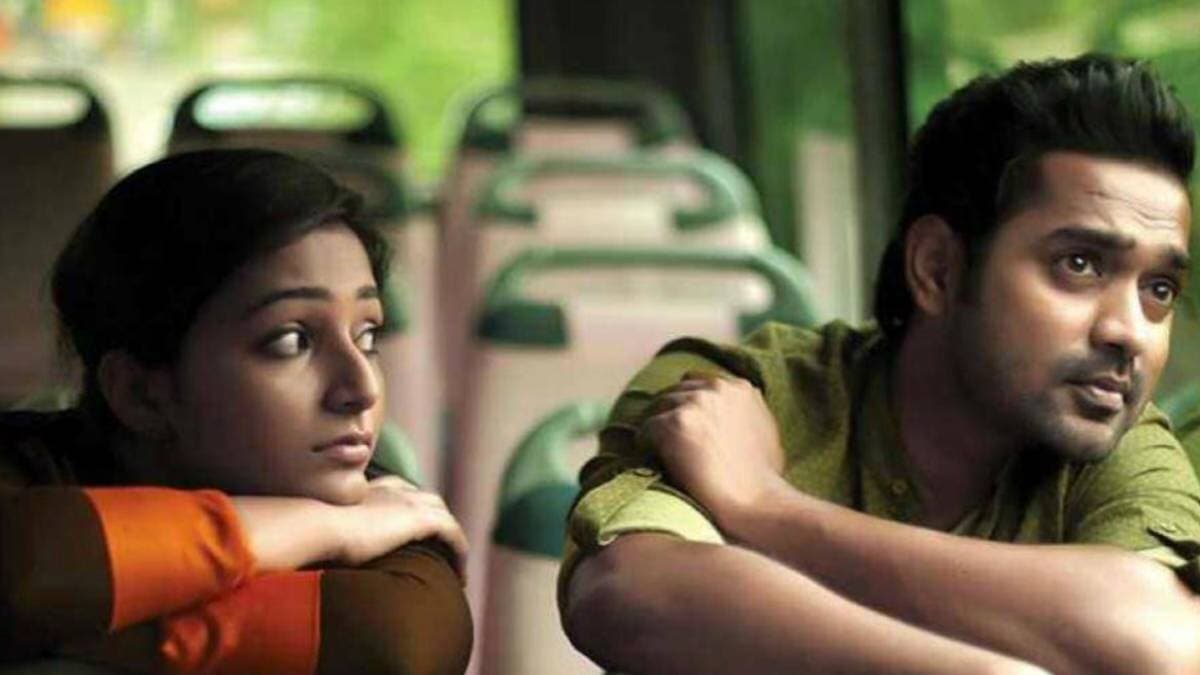
And then, just as seamlessly, you can witness her moving into the next chapter of June’s life, as a 20-something negotiating a new job, a new city and the uncertainties of love. We have often witnessed actors overplaying this “youth”, thereby reducing teenage innocence into something exaggerated and cartoonish. But then Rajisha resists that impulse. Not only does she keep June grounded, but also allows a soft poignancy to emerge as the character grows. Of course, the later portions might feel easier, as they are closer to the actor’s own age and sensibility. But it is in that fragile in-between space where girlhood slowly gives way to adulthood that she delivers a performance worthy of reference. Watch it here. 2. Anuraga Karikkin Vellam There is very little, at least initially, that invites us to warm up to Elli in Anuraga Karikkin Vellam. As Aby’s (Asif Ali) girlfriend, she is clingy, painfully needy and seemingly defined entirely by the relationship. Even when Aby signals, sometimes bluntly, that he needs space, Elli remains oblivious, clinging harder, though one could argue that Aby himself isn’t exactly the most empathetic partner. The breakup, when it comes, sends Elli into a long spell of emotional processing: tearful conversations with her friend, repeated attempts to make sense of what went wrong, moments that occasionally border on exasperating. |
Yet, the film allows her to do something rare in such arcs: evolve. Slowly, Elli moves on, discovering love again and, with it, a quiet maturity. For a debut performance, this is far from easy terrain. Or maybe one can argue that perhaps the absence of a pre-existing screen image worked in favour of Rajisha Vijayan, thereby allowing her to surrender fully to Elli’s vulnerability and awkwardness. She doesn’t “perform” the character as much as inhabit her. Even today, Elli remains one of the actor’s most memorable turns. Watch it here. 3. Stand Up In Vidhu Vincent's sophomore directorial, Rajisha Vijayan portrays a rape survivor who is forced to confront the patriarchal gaze of society, even as she processes the aftermath of the crime. Though the film is unevenly mounted and occasionally betrays amateurish execution, what lends the narrative its emotional gravity is the survivor’s arc. Unlike many films that resort to visual provocation to sensationalise the crime, this one attempts to dwell on the psychological aftermath. We are drawn into the protagonist’s internal landscape and made to sit with her trauma rather than merely witness the event that triggers it. |
That’s why Rajisha’s deeply internalised performance becomes crucial here. The shock, denial, humiliation, and eventual reckoning are rendered with quiet restraint, each emotional layer carefully revealed rather than dramatically announced. It is a performance that captures how trauma often manifests not in spectacle but in fragmentation: in pauses, in hesitation, in the quiet effort of simply trying to reclaim a sense of self. Stream the best of Malayalam cinema with OTTplay's Power Play pack, for only Rs 149 a month. 4. Masthishka Maranam In Masthishka Maranam, Krishand stages a chaotic, futuristic satire in which a grieving father escapes into a virtual simulation to process his loss, including an encounter with superstar Freida Soman. Frieda is positioned as the distilled image of a typical male fantasy, and exists only in heightened frames, which are all kinetic and deliberately objectified. And most of the time, you see her in sequences charged with voyeuristic energy. When a leaked “memory experience” involving her surfaces, the film brushes up against questions of voyeurism, consent and moral hypocrisy. |
For an actor, Frieda is a demanding part that requires flamboyance and a certain abandon, and Rajisha commits fully to its performative pitch. She embraces the role’s theatricality with enthusiasm, keeping it uninhibited, sassy, and loud when required. But the catch is that the performance rarely transcends the film’s surface-level treatment of the character. It neither complicates the gaze nor lends the narrative any added gravitas, which is why it settles near the bottom of this list. |
5. Finals Rajisha plays Alice Varghese, a cycling prodigy from a small town in Kerala. Coached by her stern father, she navigates her demanding routine with focus, even while holding on to small pockets of tenderness with her childhood sweetheart. When a tragic accident brutally derails her Olympic dream, leaving her bedridden in the latter half, it is in her physical and emotional transformation that the performance truly deepens. Not only does Rajisha make Alice believable as a trained cyclist, but it’s interesting how she maps her inner world with such affecting nuance. Despite the narrative gradually shifting focus to her boyfriend’s journey, Alice lingers as a bitter-sweet presence that continues to haunt the film. |
Like what you read? Get more of what you like. Visit the OTTplay website or download the app to stay up-to-date with news, recommendations and special offers on streaming content. Plus: always get the latest reviews. Sign up for our newsletters. Already a subscriber? Forward this email to a friend, or use the share buttons below. |
| | This weekly newsletter compiles a list of the latest (and most important) reviews from OTTplay so you can figure what to watch or ditch over the weekend ahead. |
| Each week, our editors pick one long-form, writerly piece that they think it worthy of your attention, and dice it into easily digestible bits for you to mull over. |
| In which we invite a scholar of cinema, devotee of the moving image, to write a prose poem dedicated to their poison of choice. Expect to spend an
hour on this. |
| | Hindustan Media Ventures Limited,
Hindustan Times House, 18-20,
Second Floor, Kasturba Gandhi
Marg, New Delhi - 110 001, India |
DOWNLOAD THE OTTPLAY APP ▼ |
| | If you need any guidance or support along the way, please send an email to ottplay@htmedialabs.com . We’re here to help! |
©️2026 OTTplay, HT Media Labs. All rights reserved. |
| | |