
Dear Reader,
JC Parets has spent over two decades decoding the market’s most powerful signals.
He’s the man Fox Business calls “The King of Technicals.”
He warned investors of the 2008 crash... the 2020 COVID collapse... and even called the exact bottom of the market in 2022 — on live TV.
Now, JC says an ominous day is fast approaching — one that could mark the next major turning point for the entire market.
And he’s naming the specific date it could hit right now.
If history is any guide, ignoring this warning could be one of the most expensive mistakes of your investing life.
Click here now to see JC’s latest market forecast before it’s too late.
Regards,
Ryan McGrath
Co-Publisher, TrendLabs
NASA Calls, Plug Answers: A Turning Point for Hydrogen?
Author: Jeffrey Neal Johnson. Article Posted: 12/3/2025.
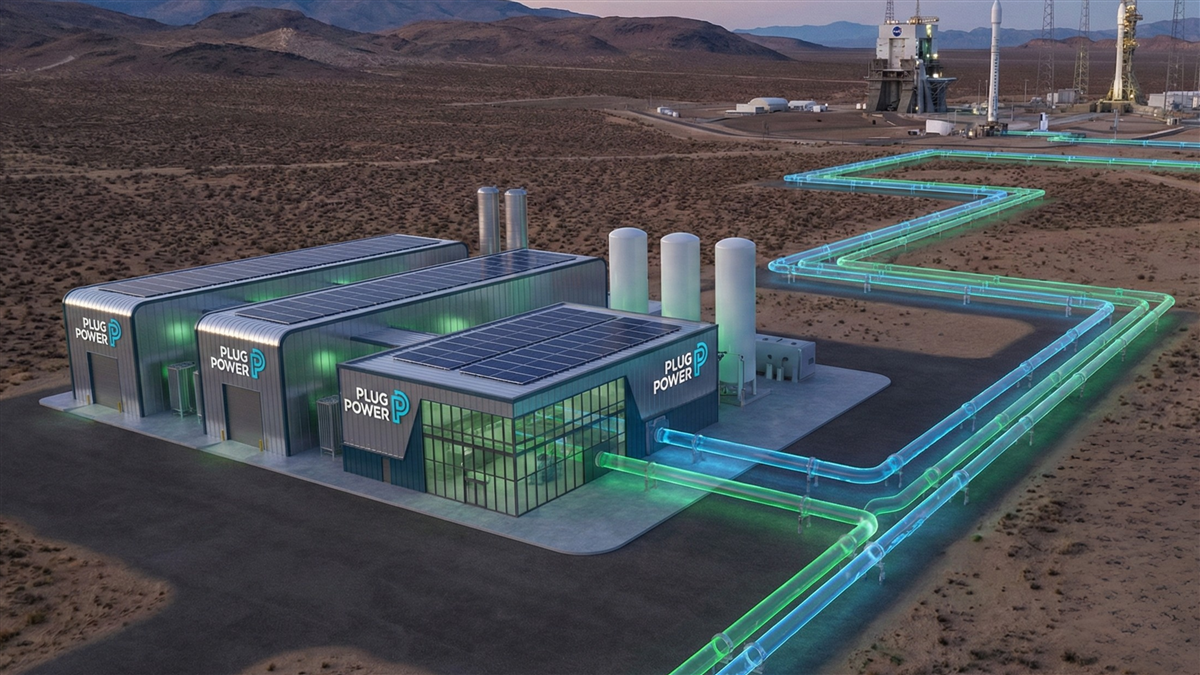
In Brief
- Securing a liquid hydrogen supply contract with NASA validates the reliability and purity of the production network for demanding aerospace applications.
- The company continues to expand its commercial footprint with major logistics partners by locking in long-term agreements that secure recurring revenue.
- Recent financing moves have strengthened the balance sheet and eliminated restrictive debt covenants, providing a stable runway for growth.
"Is hydrogen dead?" That question has haunted investors in the renewable energy sector throughout 2025. After a year of brutal stock performance and fading sentiment, the industry needed a clear sign of life. It just got one from perhaps the most exacting customer in the solar system: NASA. The agency does not think hydrogen is dead — in fact, it is betting mission-critical operations on it.
Plug Power (NASDAQ: PLUG) has begun a contract to supply NASA with liquid hydrogen. The timing is important. While Plug Power's stock has been pressured by cash-burn worries and delayed profitability, this partnership delivers something money alone cannot: strong external validation.
Claim Your Complimentary Bitcoin Reward (Ad)
Many have already secured their free Bitcoin reward offered by our esteemed guest. How about you?
In an effort to spread the word about our upcoming workshop, he's generously offering $10 in Bitcoin (BTC) to participants.
Absolutely no strings attached.
Landing a contract with an aerospace agency known for zero-tolerance reliability and purity standards directly challenges the bearish narrative that hydrogen is too difficult or unreliable at scale. The deal serves as a seal of quality for Plug Power's production network. Combined with the company's recent financial restructuring, it suggests Plug Power may be turning a corner — shifting the story from speculative cash burn toward validated execution and a potential stabilization of investor sentiment.
Engineering for the Extremes
To appreciate the deal's significance, look beyond the headline dollar amount. Under the agreement, Plug Power will supply up to 218,000 kilograms (about 480,000 pounds or 240 tons) of liquid hydrogen to NASA's Glenn Research Center in Cleveland, Ohio, and the Neil A. Armstrong Test Facility in Sandusky, Ohio. The contract is worth up to $2.8 million.
From a strictly financial standpoint, $2.8 million won't fix the company's earnings misses or reverse recent revenue declines by itself. But treating this as just a revenue event misses the larger point: the true value is the NASA standard.
Liquid hydrogen is notoriously hard to handle. It must be kept cryogenic and requires sophisticated infrastructure to transport and store with minimal loss. NASA also demands extreme purity — contaminants in hydrogen can be catastrophic for aerospace testing and operations.
By selecting Plug Power, NASA is effectively certifying that the company's green hydrogen network — spanning plants in Georgia, Tennessee, and Louisiana — meets these stringent requirements. That validation ripples across the industrial sector. If Plug Power's infrastructure is reliable enough for NASA, it strengthens the case for other industrial use cases, from data centers to logistics and heavy manufacturing. It signals that the company's production capabilities have moved beyond the "science-project" phase into operational, reliable service for demanding customers.
From Blueprints to Barrels
The NASA contract is one more link in a growing chain of commercial wins showing that real-world demand is materializing. Recently, Plug Power expanded its partnership with Uline, a major North American logistics company, extending that relationship through 2030 and locking in long-term demand for hydrogen fuel cells.
These agreements share a common theme: reliability. Uline extended its deal because Plug Power's fuel cells reliably power daily logistics operations. NASA contracted with the company because its fuel meets exacting purity standards. Plug Power has also advanced a large framework agreement for 3 gigawatts (GW) of electrolyzers with Allied Green Ammonia.
These developments illustrate a key shift: Plug Power is transitioning from construction mode — spending heavily to build plants and develop technology — to delivery mode, where the focus is selling molecules and equipment to established customers. That shift materially lowers execution risk. The question moves from "can they build it?" to "how quickly can they sell it?"
Solving the Liquidity Puzzle
Technological validation matters only if the company has the cash to operate. Liquidity has been the primary overhang for Plug Power and a major contributor to the stock's decline in 2025. The company has recently taken decisive steps to address that risk and stabilize its balance sheet.
Plug Power closed a $431.25 million convertible note offering, which netted approximately $399 million in cash. Management used the proceeds to retire high-cost debt and eliminate a restrictive first-lien debt structure.
Removing the first-lien debt is important. It lifts restrictive covenants that can constrain a company's flexibility and eases immediate pressure on the balance sheet. That effectively clears financial runway and gives management more room to execute its 2026 plans without an imminent liquidity threat.
The company is also seeking strategic flexibility. A shareholder meeting scheduled for Jan. 15, 2026, will include a vote to increase the number of authorized shares. While some investors rightly view this as a potential source of dilution, it is a common move for growth companies — ensuring management has tools to fund expansion or manage the balance sheet without resorting to unfavorable financing terms.
Ready for Liftoff: A Launchpad for Recovery?
The investment case for Plug Power has evolved over the past quarter. The stock trades at a fraction of its peak, yet the company's operational footing appears stronger: operational plants, blue-chip commercial customers like Uline, and now a government customer with the highest reliability demands.
The NASA contract could mark a turning point in sentiment. It provides the technical validation needed to counter the bearish thesis that questions hydrogen's viability. For investors seeking high-growth exposure to the global energy transition, Plug Power presents an attractive risk/reward profile at these levels — a company that has weathered the market shakeout, strengthened its finances with fresh capital, and earned the trust of one of the most demanding customers in the solar system.
This email communication is a paid advertisement from Trend Labs, a third-party advertiser of MarketBeat. Why did I receive this email message?.
If you need assistance with your subscription, please don't hesitate to email our U.S. based support team at contact@marketbeat.com.
If you would no longer like to receive promotional emails from MarketBeat advertisers, you can unsubscribe or manage your mailing preferences here.
© 2006-2025 MarketBeat Media, LLC. All rights protected.
345 North Reid Place #620, Sioux Falls, S.D. 57103. United States..