

Ticker Reports for December 9th
Top 5 Highest-Rated Dividend Stocks, According to MarketBeat
MarketBeat’s value-building tools include the MarketBeat Top-Rated Dividend Stocks screener, which identifies highly rated dividend stocks. The tool analyzes analyst data on dividend stocks and ranks them by rating, but investors need to be cautious when using it. A dividend stock with a score of 4.0 has 100% bullish analyst ratings, indicating dividend-affirming market support, but there may be only one analyst covering it. This article goes a step further, filtering out names with a score below 3.0 and a yield below 3.0%, focusing on small- and mid-cap companies worth investing in. The results are a quick look at some of the highest-yielding and most-loved small and mid-cap stocks on Wall Street.
Cenovus Energy Is Well-Positioned to Pay Dividends in 2026
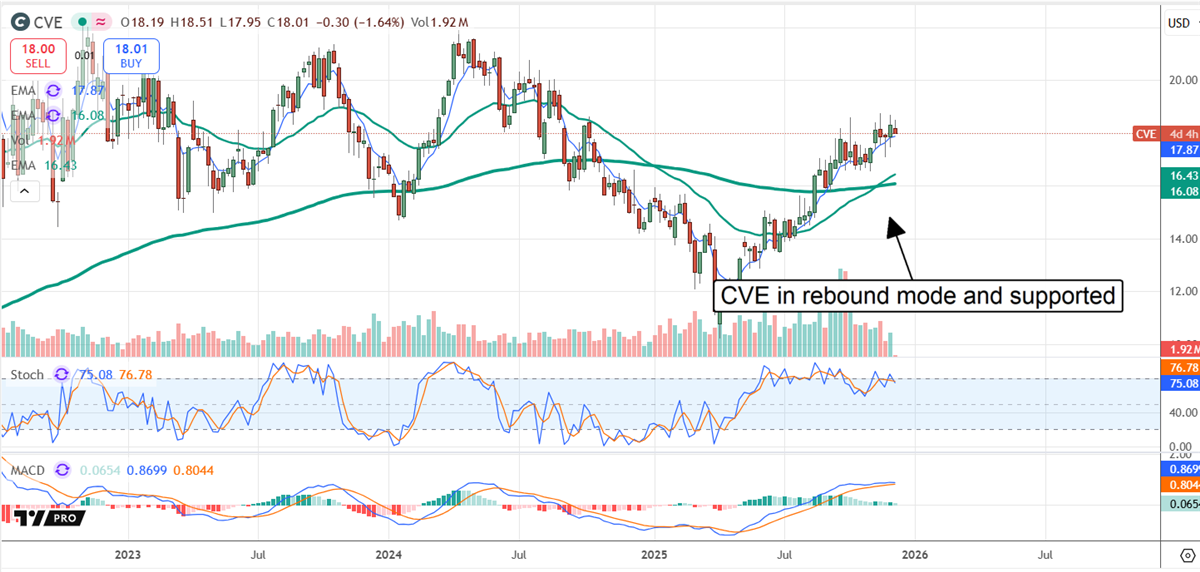
Cenovus Energy (NYSE: CVE) is an integrated energy operator with assets in the U.S. and Canada.
Analysts like it because of its cost-effective assets, substantial free cash flow margin, and capital return, including an approximately 3.2% yield at the end of 2025.
There are some things to consider, such as the erratic nature of quarterly payments, but the trend is upward. While the size of payments may fluctuate on a quarter-to-quarter basis, the payment itself is reliable and has been trending higher on an annualized basis.
Cenovus is ranked 4th overall on MarketBeat’s screen, but it is the first to offer a return exceeding 3.0%. Its quality score is 3.15 and is based on a sufficient number of analysts to provide conviction.
MarketBeat tracks 13 with current coverage; they rate the stock as Buy and project it advancing by 40% in 2026. The tailwind they provide is strong, as coverage has increased significantly since early 2025, and sentiment is strengthening.
Heritage Commerce Corp: Yield Offsets Limited Upside
Heritage Commerce Corp (NASDAQ: HTBK) is 9th on MarketBeat’s screener and second on this list, with a score of 3.0 and a yield of 4.5%.
It is the holding company for Heritage Bank, a California operator with six analysts covering it.
The analyst data reveal that this market is strengthening, with coverage doubled over the last year, but the price target trend remains tepid.
The consensus estimate of $11.50 assumes the stock is fairly valued at the end of 2025, and the upside potential indicated at the high end is less than 10%.
The dividend is currently around 60% of the earnings forecast, a sustainable level, but there are no plans for an increase in the near future. 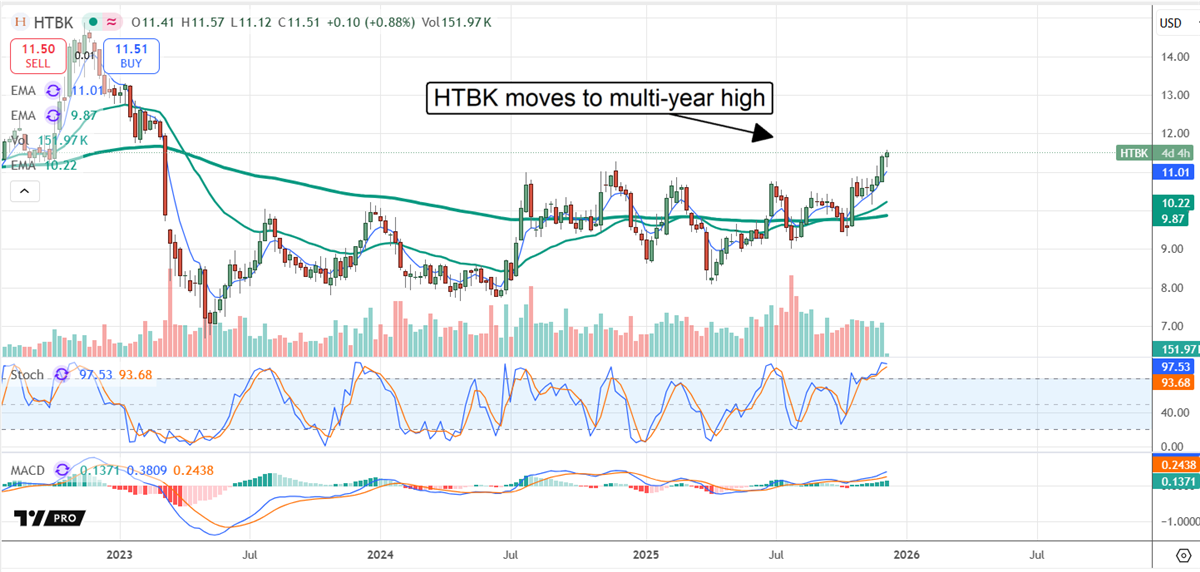
ACNB Corporation: Dividend Growth Is on the Table
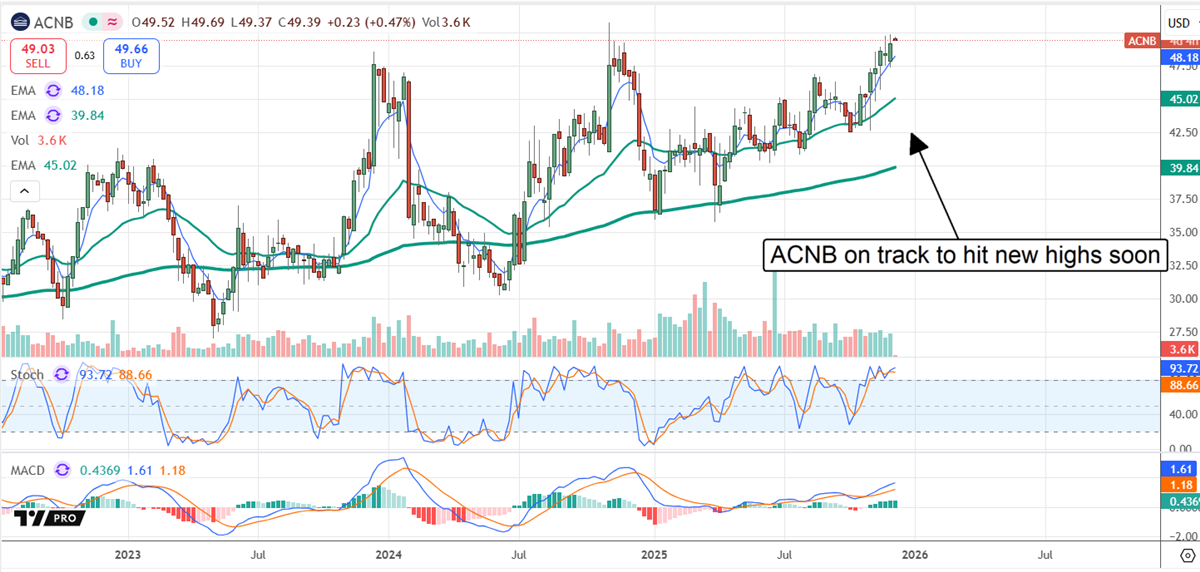
ACNB (NASDAQ: ACNB) ranks 12th overall with a score of 3.0% and a similar yield.
The payment is reliable and safe, less than 40% of the earnings outlook, and expected to grow over time.
The distribution has been increasing for eight consecutive years, as of late 2025, and is growing at a modestly high single-digit compound annual growth rate (CAGR) that analysts like.
Only four cover this stock, but they rate it as a Buy, and their price targets have increased over the past year. The group points to $52 at the high-end, sufficient to break out of a long-term range and set a new all-time high.
Evergy Outlook Supported by AI Energy Needs
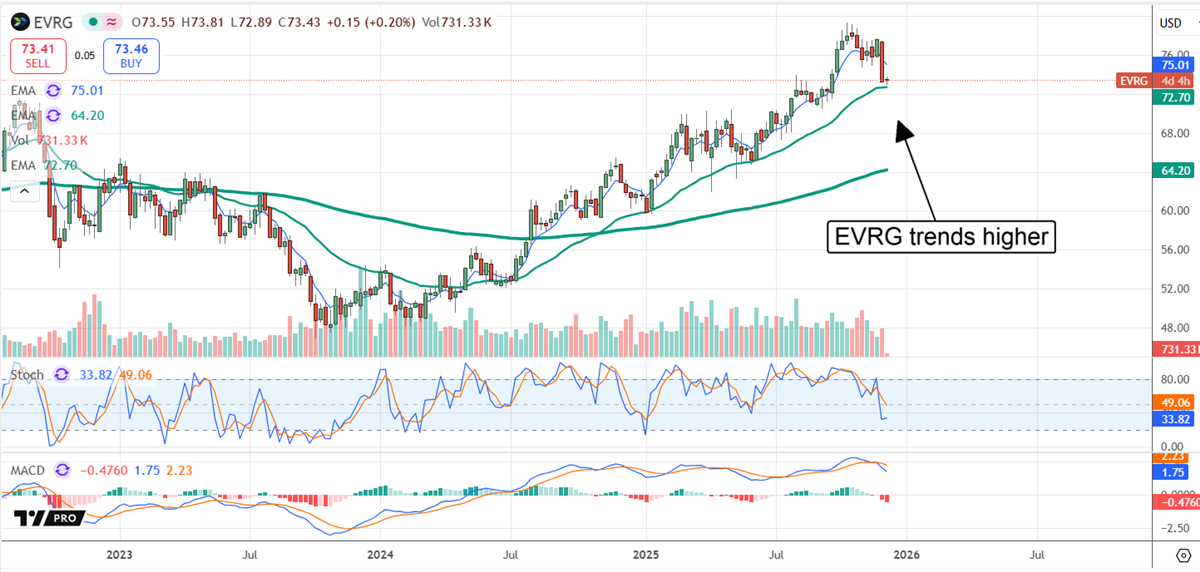
Evergy (NASDAQ: EVRG) is an electric utility operating in Missouri. It is well-regarded by analysts for its cash flow, payments, and AI position. Growing demand and projects awaiting approval suggest an explosive growth trajectory for the next few years. It is ranked 16th on the screener, scores a 3.0% for coverage, and yields approximately 3.8%.
The dividend payment is close to 80% of the earnings, but this isn’t a red flag. Utilities, which have visible revenue and earnings streams, tend to pay higher rates and can sustain them.
This small-cap company has raised its dividend payments for over 20 consecutive years and is projected to keep doing so in the near future. Eleven analysts rate this stock a Buy, the price target trend is upward, and there is potential for 25% upside at the high end.
Copa Holdings: Long-Time Favorite Is Still a Good Buy
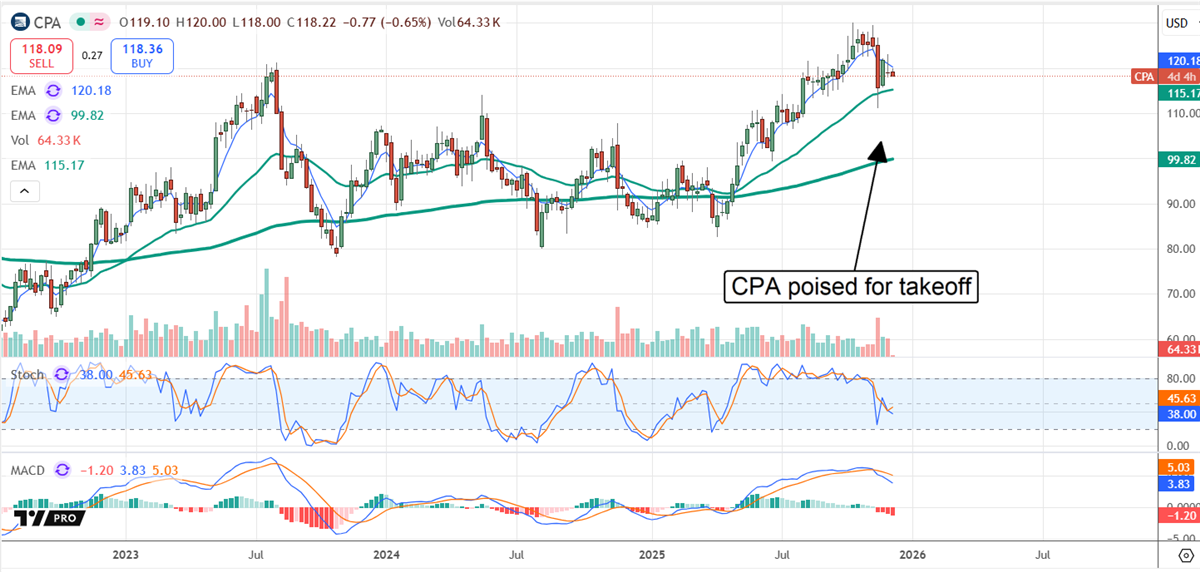
Copa Holdings (NYSE: CPA) has long been ranked on MarketBeat’s list of highly-rated dividend stocks.
This Latin American air carrier and growth story is rated a consensus Buy by 10 analysts, who see it rising 35% over the next year.
There is conviction in the forecast, as price targets are rising and a move to the high-end range is likely, suitable for another 12.5% upside when reached. The dividend is also attractive, yielding more than 5.4% annualized, and is expected to grow.
The company pays about 40% of its earnings, and earnings are forecast to grow, suggesting a higher-than-market-average distribution CAGR can be sustained.

They turned memecoin chaos into a science
They turned memecoin chaos into a science

Carvana Soars Over 10,000% From Lows—Now It's in the S&P 500
Carvana Co. (NYSE: CVNA) has just completed one of the market's most remarkable comebacks. Just a few years after facing bankruptcy concerns that sent its stock tumbling to an all-time low of $3.72, the company is now joining the prestigious S&P 500 index. This milestone event, effective before the market opens on Dec. 22, 2025, serves as a powerful validation of a dramatic operational and financial turnaround that has seen the stock gain over 10,000% from its 2022 lows.
The market’s reaction to the news was immediate and decisive. Carvana’s stock price jumped by double digits to a new 52-week high of $456.97 on explosive trading volume of over 14 million shares, nearly four times its daily average. This is more than a symbolic victory; it is a significant technical event that will force a new wave of institutional buying, cementing the company’s status as a high-growth industry leader.
The Index Effect: A Powerful, Non-Discretionary Catalyst
Carvana's inclusion in the S&P 500 creates a powerful and automatic demand for its shares, a phenomenon known as the Index Effect. The reason lies in the mechanics of modern investing. An estimated $13 trillion in assets is directly indexed or benchmarked to the S&P 500. The massive passive funds and ETFs that track this index are now obligated to purchase Carvana stock to mirror the index's composition accurately. For these funds, buying is not a choice based on valuation or sentiment; it is a mandate.
This creates a significant, near-term demand shock. The forced buying from passive funds provides a strong technical tailwind and a new level of support for the share price as the inclusion date approaches. This dynamic also puts immense pressure on short sellers, investors who bet that a stock's price will fall. As of mid-November, over 11 million shares of Carvana were held short. The sudden, inelastic demand from index funds can trigger a short squeeze, a scenario where short sellers are forced to buy back shares to close out their losing positions. This rush to buy adds fuel to the fire, further accelerating the stock's upward price momentum.
The Engine of the Turnaround: Data-Driven Validation
While the index news is a powerful catalyst, it was earned, not given. Carvana’s inclusion was made possible only after the company met the S&P's strict financial criteria, chief among them being sustained profitability under Generally Accepted Accounting Principles (GAAP). This achievement serves as an institutional stamp of approval on a business that has fundamentally transformed itself from a cash-burning growth story into a profitable industry leader.
The data from its recent financial reports tells the story of this operational success.
- Profitability Mastered: After a period of significant losses, Carvana has demonstrated a strong command of its bottom line. In the third quarter of 2025, the company reported a net income of $263 million and now boasts a positive trailing twelve-month earnings per share (EPS) of $4.38.
- Explosive Growth: Proving it can scale profitably, Carvana’s revenue grew an impressive 55% year-over-year in the third quarter. This was driven by a 44% increase in retail units sold, far outpacing many of its industry peers. This performance beat revenue estimates but missed on EPS, showing that cost efficiencies remain a key focus.
- A Fortified Balance Sheet: The company has aggressively de-risked its financial position. Over the past two years, it has retired $1.2 billion in corporate debt, and its net debt-to-Adjusted EBITDA ratio now stands at a healthy 1.5x, its strongest financial position ever.
This impressive financial recovery is the result of concrete operational improvements. By integrating its acquired ADESA auction sites, the company has positioned inventory closer to customers, cutting average delivery times by a full day. In a pilot program in Phoenix, Carvana is now achieving same-day or next-day delivery for 40% of customers, a capability that sets a new standard for the industry.
From Turnaround to Market Dominance
Carvana’s recent financial performance has sparked debate over the stock's high valuation, with its price-to-earnings ratio (P/E) now exceeding 100. This premium reflects the market's confidence in Carvana's disruptive potential and its progress toward its long-term target of selling 3 million vehicles annually with industry-leading profit margins.
Investors have also noted the recent pattern of stock sales by top executives. However, these transactions are typically executed under pre-scheduled Rule 10b5-1 trading plans, which allow insiders to sell shares for personal financial management and diversification. Critically, key insiders, including CEO Ernie Garcia III, continue to retain substantial equity stakes, ensuring their long-term interests remain closely aligned with those of shareholders.
With its entry into the S&P 500, Carvana is embarking on a new era. The narrative has decisively shifted from survival to market share dominance. Management's guidance reflects this confidence, forecasting over 150,000 retail units sold in the fourth quarter and full-year 2025 Adjusted EBITDA at or above the high end of its $2 to $2.2 billion range. For investors, the focus now turns to execution as Carvana leverages its powerful e-commerce platform and fortified balance sheet to redefine the future of automotive retail.

Recovery Alert: Top Crypto Setup for Massive Gains
Recovery Alert: Top Crypto Setup for Massive Gains
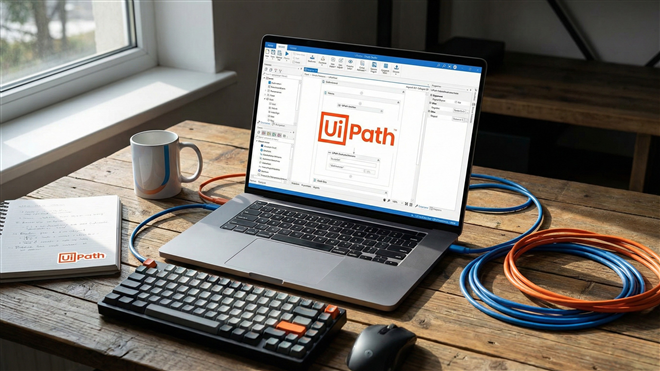
UiPath Surges on Earnings: Should Investors Chase the Momentum?
Shares of UiPath Inc. (NYSE: PATH) have been on a tear, grabbing fresh attention after the company posted better-than-expected fiscal year 2026 (FY 2026) Q3 earnings and broke out to new 52-week highs. The stock has surged more than 36% over the past week, powered by strong results and a clear jump in trading volume.
With a market capitalization of roughly $10.2 billion and a chart that has dramatically outperformed, UiPath might be suddenly landing on many investors’ radars. The question now is whether this innovative software and automation company deserves a closer look.
UiPath Combines AI Agents, Robots, and Human Collaboration
UiPath describes its mission as “shaping the future of agentic automation.” The UiPath Platform brings together AI agents, robots, people, and machine learning models to collaborate across an organization, from front-office workflows to complex back-office operations. The company provides a complete end-to-end automation ecosystem designed to build, run, manage, and govern high-scale automation.
Its embedded AI, machine learning, and natural language processing capabilities allow UiPath’s software robots to mimic human behavior, process unstructured information, and enhance decision-making across a wide range of use cases. While the company’s broader RPA platform remains its core strength, momentum has been accelerating in its AI-agent orchestration strategy. UiPath recently highlighted that more than 950 companies are now building AI agents through its platform, and its Maestro product has orchestrated over 365,000 processes.
The company has also expanded its partnerships and integrations with leading AI corporations, including NVIDIA (NASDAQ: NVDA), Alphabet (NASDAQ: GOOGL), and Microsoft (NASDAQ: MSFT). One of its standout new offerings is ScreenPlay, a solution that aims to blend traditional RPA with large language model intelligence, giving enterprises more reliable and adaptable automation capabilities.
Recent Earnings Point Toward Early Success
UiPath reported Q3 FY 2026 earnings on Dec. 3, producing another meaningful beat. EPS came in at 16 cents, topping consensus estimates of 14 cents. Revenue grew 15.9% year over year to $411.1 million, well above the $392.5 million forecast. Importantly, key operating metrics also trended in the right direction.
The annualized renewal run-rate (ARR) increased by 11% year-over-year, and the company maintained a healthy dollar-based net retention rate of 107%. Large customer adoption expanded meaningfully: accounts with over $100k in ARR grew from 2,235 to 2,506, and customers generating more than $1 million in ARR jumped from 302 to 333. The total number of customers rose to 10,860, up 70% year-over-year.
Looking ahead, UiPath guided for Q4 revenue between $462 million and $467 million, with the midpoint slightly above analyst expectations. It also expects ARR to finish the year between $1.844 billion and $1.849 billion.
Sentiment Is Mixed Despite Strong Results
Even with the earnings beat, strong execution, and powerful price momentum, Wall Street’s sentiment remains lukewarm. Based on 17 analyst ratings, UiPath holds a Reduce consensus rating and a $15.46 price target, implying nearly 20% downside from recent levels. Whether the company’s latest performance will spark a re-rating is still uncertain.
Institutional activity has also been modest. Over the past 12 months, UiPath recorded $1.57 billion in inflows versus $1.23 billion in outflows, resulting in a relatively small net inflow. Insider activity has also leaned bearish.
While insider ownership remains sizable at 23.19%, no insiders have purchased shares in the last year, while multiple insiders sold roughly $48 million worth of stock. Recent CEO sales at around $19 per share may be rational given the stock’s 105% rise off its lows, but they could still raise eyebrows if selling continues without any offsetting insider buys.
Should Investors Buy UiPath Now?
UiPath’s latest earnings confirm that the company is executing well and advancing its automation and AI roadmap. The stock also remains reasonably valued at a forward P/E of roughly 25. But with shares rallying from $13 last month to as high as $20 this week, and up more than 60% this quarter, the risk is that investors may be buying into peak optimism.
For investors considering a position, waiting for consolidation may be prudent. A period of stabilization, coupled with clearer signs of analyst upgrades or shifting sentiment, could offer a more durable setup. UiPath’s fundamentals are improving, but for the rally to sustain, Wall Street’s view likely needs to catch up to the price action.
Trump's Crypto Plan: One Token Set to Explode
Trump's Crypto Plan: One Token Set to Explode

MarketBeat Media, LLC dba TickerReport
345 N Reid Place, Suite 620, Sioux Falls, SD 57103.