Sandhya: The Shape-Shifting Enigma Hindi Cinema Could Never Contain
|
Muse, mischief-maker, mirage: how an untrained performer rewired Shantaram’s colour-era imagination and left behind a legacy Indian cinema still struggles to name. |
 | Vikram Phukan | |
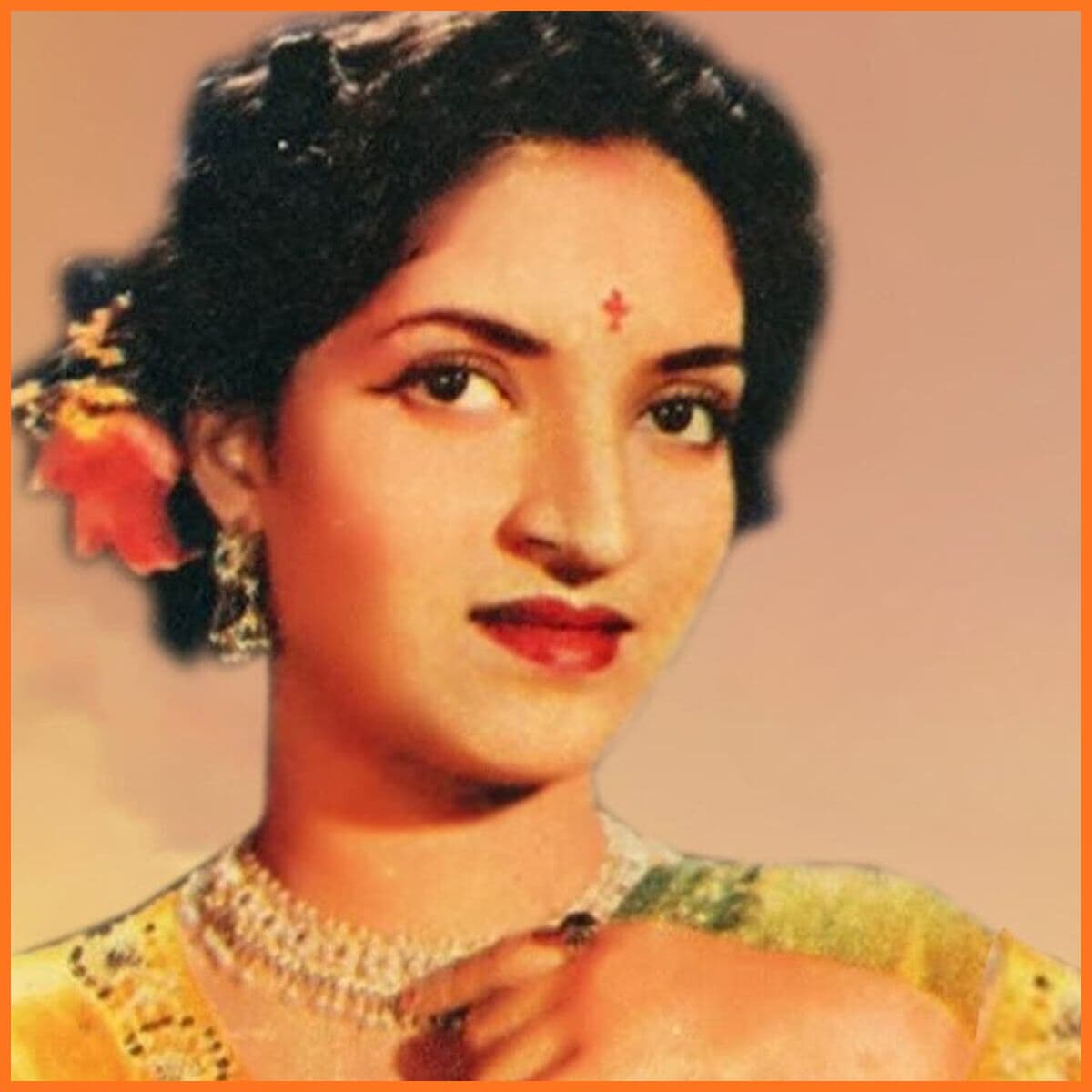
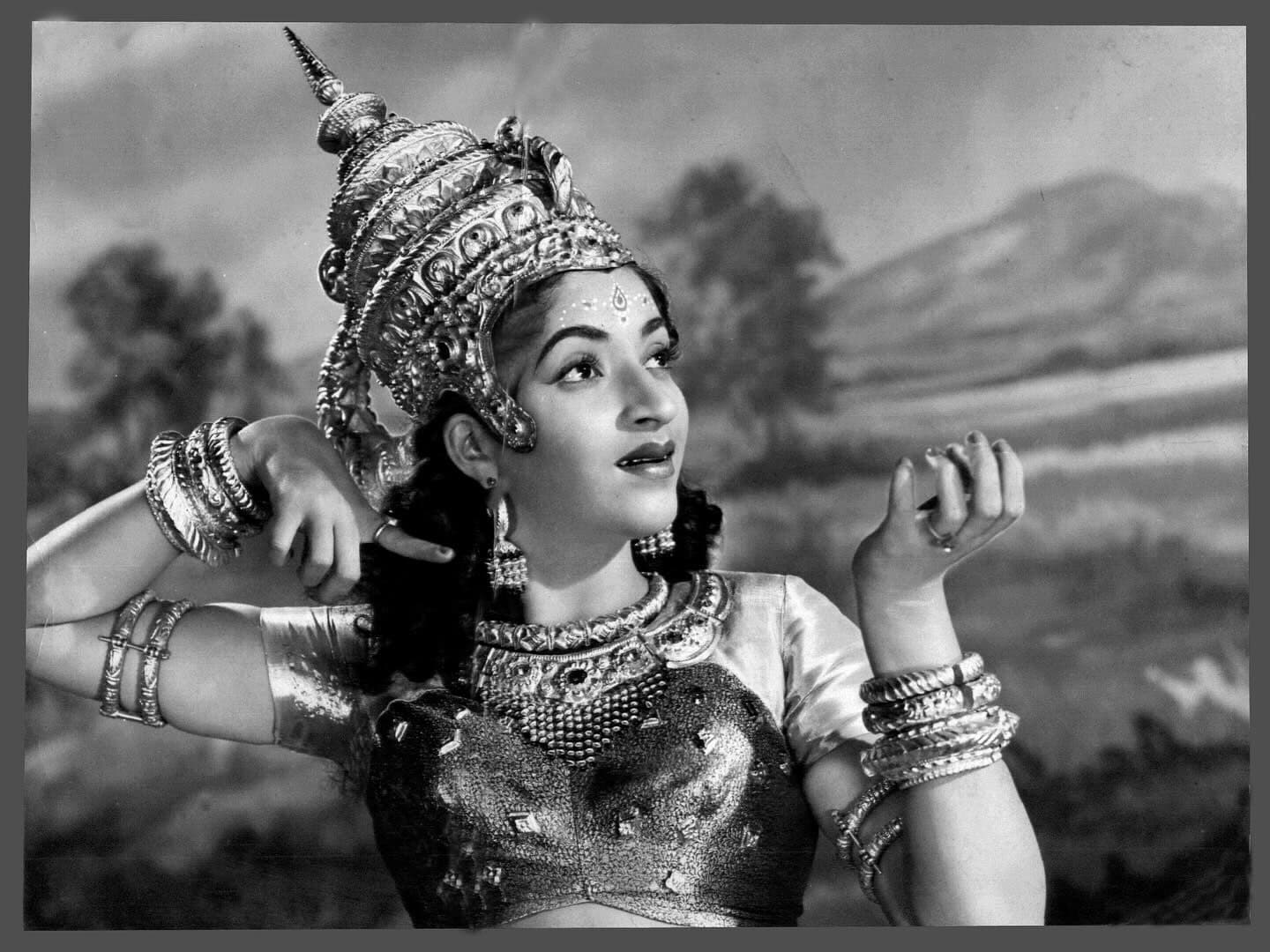
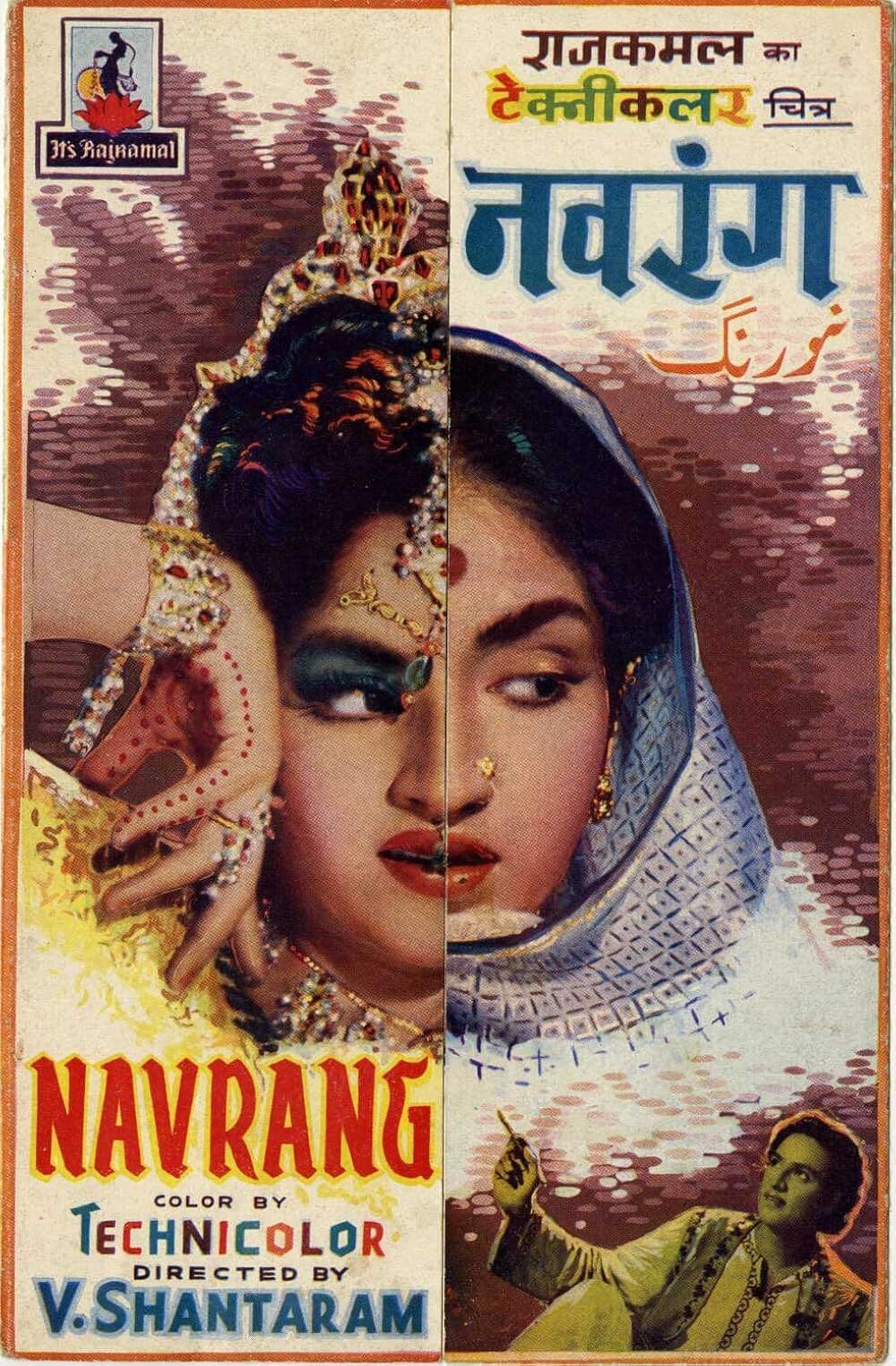
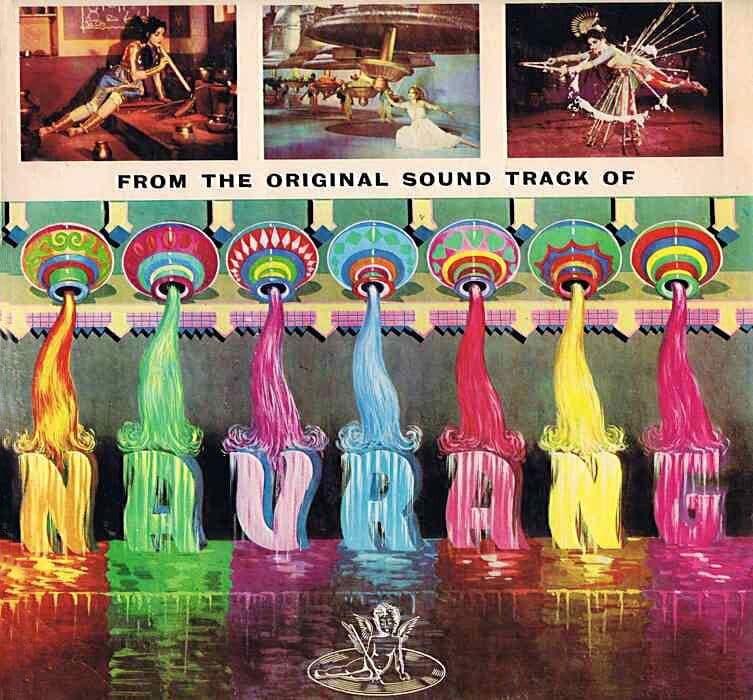
THE vivid, idiosyncratic Sandhya, who passed away last month, entered my life through Chitrahaar, Doordarshan’s weekly mixtape of film songs that was a national ritual in the 1980s. The songs were different each time, but a few favourites kept coming back, with Asha Bhosle’s ' Aadha Hai Chandrama' and ' Ja Re Hat Natkhat' from V Shantaram’s Navrang (1959) always among the regulars. In the first, Sandhya balances an improbable number of pots on her head with a dancer’s ease (“They’re stuck together,” we always insisted), and in the second, in a feat of sheer androgyny, we were convinced she was dancing as a man from the back and a woman from the front, until someone finally yelled the obvious, “It’s a camera trick!” But before we could savour those generous dollops of technicolour kitsch, there was one other memory that became Sandhya-tinged over time. When our old black-and-white television was replaced with a new colour set, both machines sat side by side for a brief moment, tuned to the same channel, with a dance from the Sunday feature, Geet Gaaya Patharon Ne (1964), playing. The makeup on the actress that looked perfectly normal on monochrome showed up as a translucent lavender on the colour screen. It was Shantaram’s daughter Rajshree, not Sandhya, but the moment has, over time, fused in my mind with Sandhya’s own violet-tinted screen presence, perhaps because I later discovered just how completely she shaped Shantaram’s visual world, especially once he embraced colour with 1955’s psychedelic Jhanak Jhanak Payal Baaje and slowly acquired, in the lazy Western shorthand of the time, the reputation of India’s own Busby Berkeley. And Sandhya was game for umpteen costume changes and the full-throttle theatricality that his gorgeously incongruous production numbers required. Stream live sports, blockbuster films and hit shows across 30+ platforms with OTTplay's Power Play monthly pack, for Rs 149 only. Grab this limited-time offer now! |
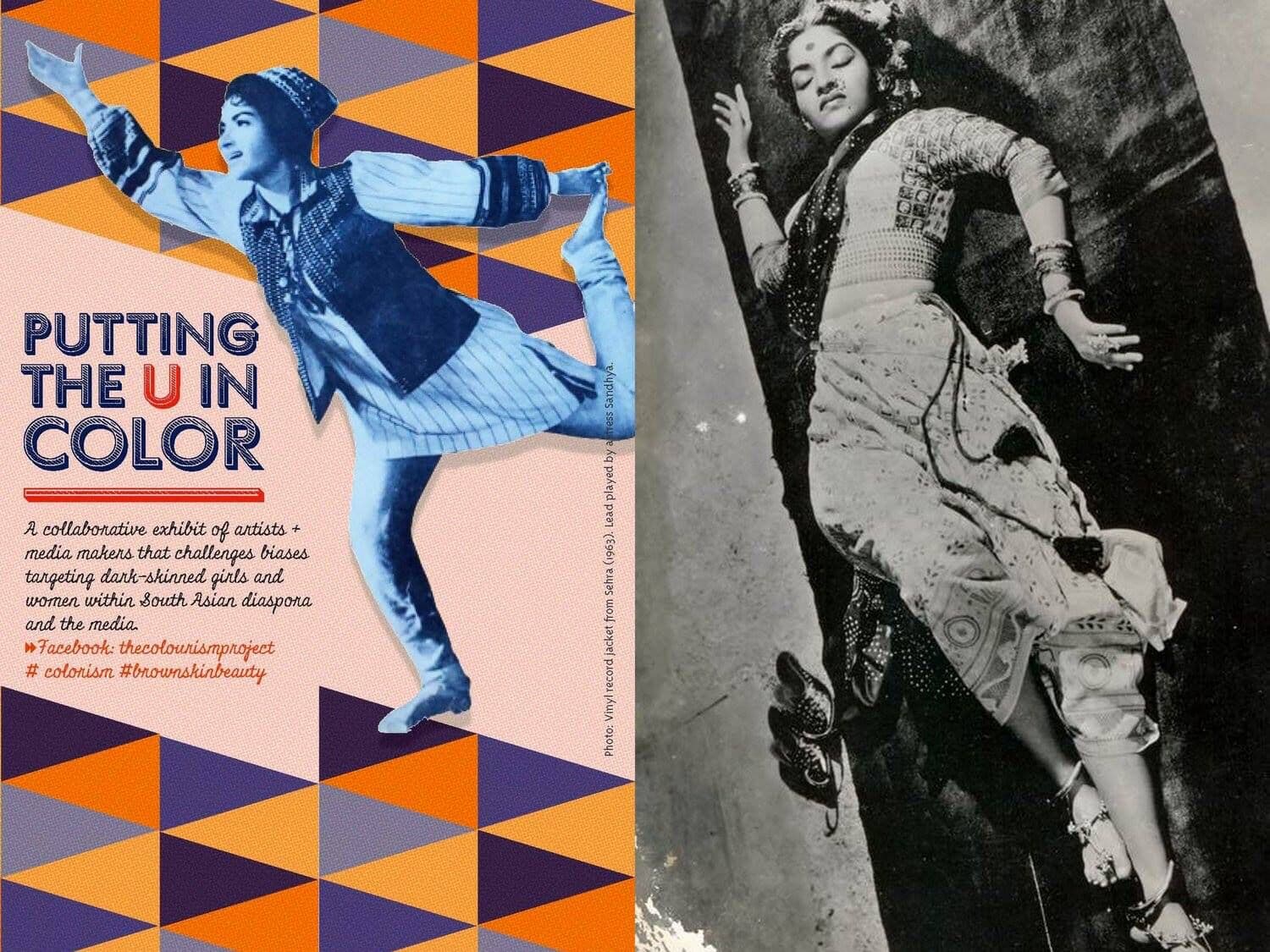
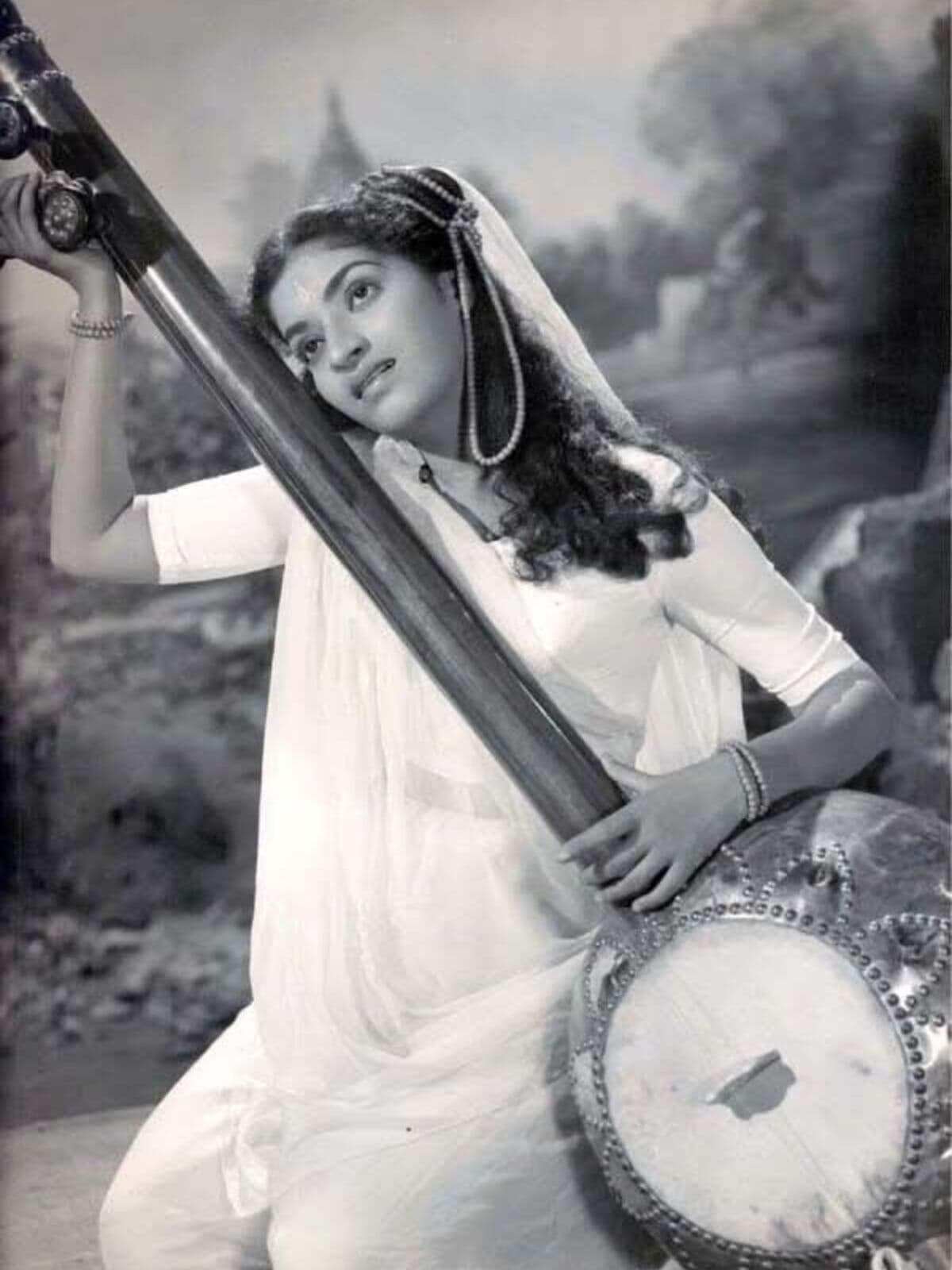
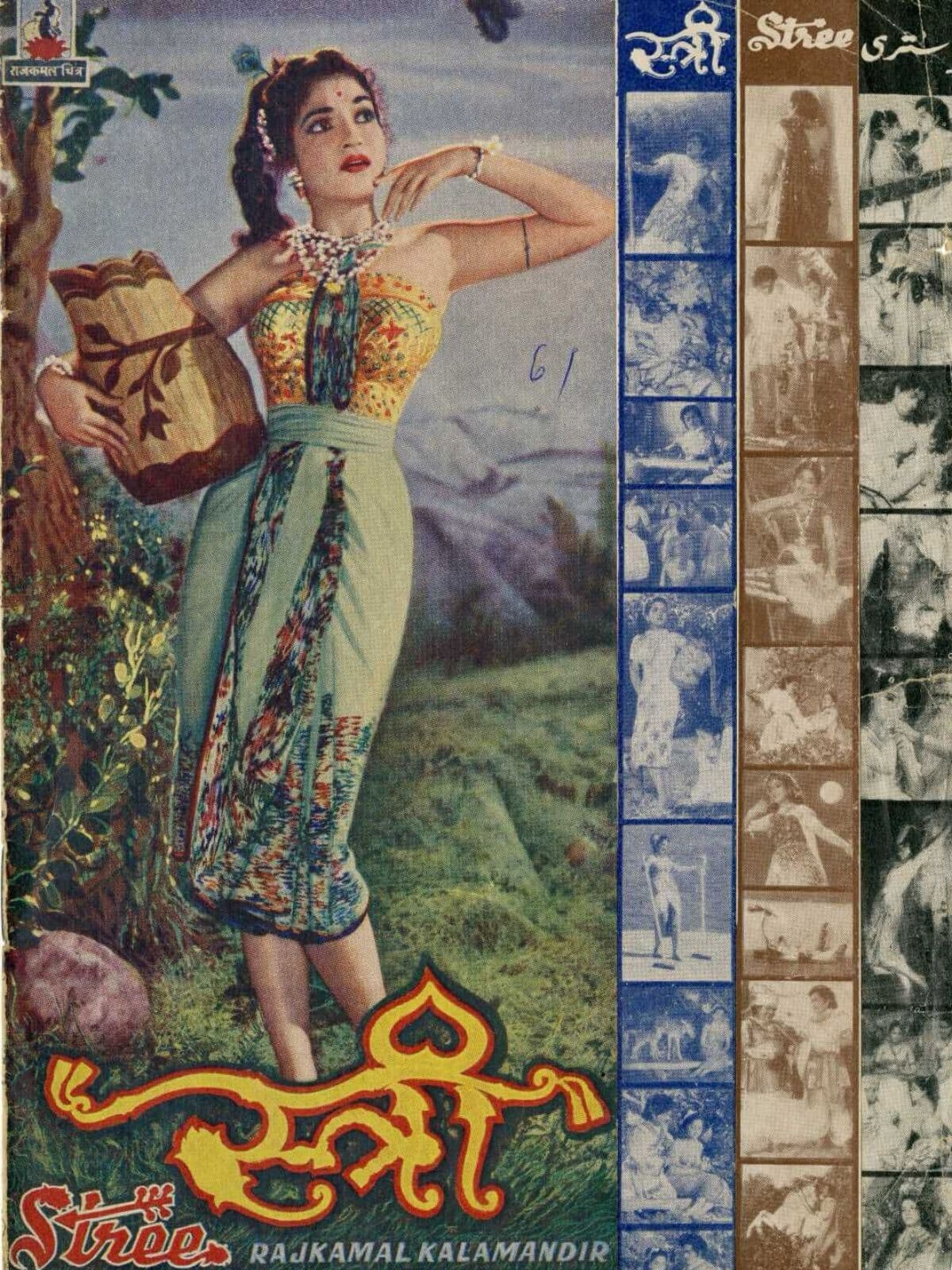
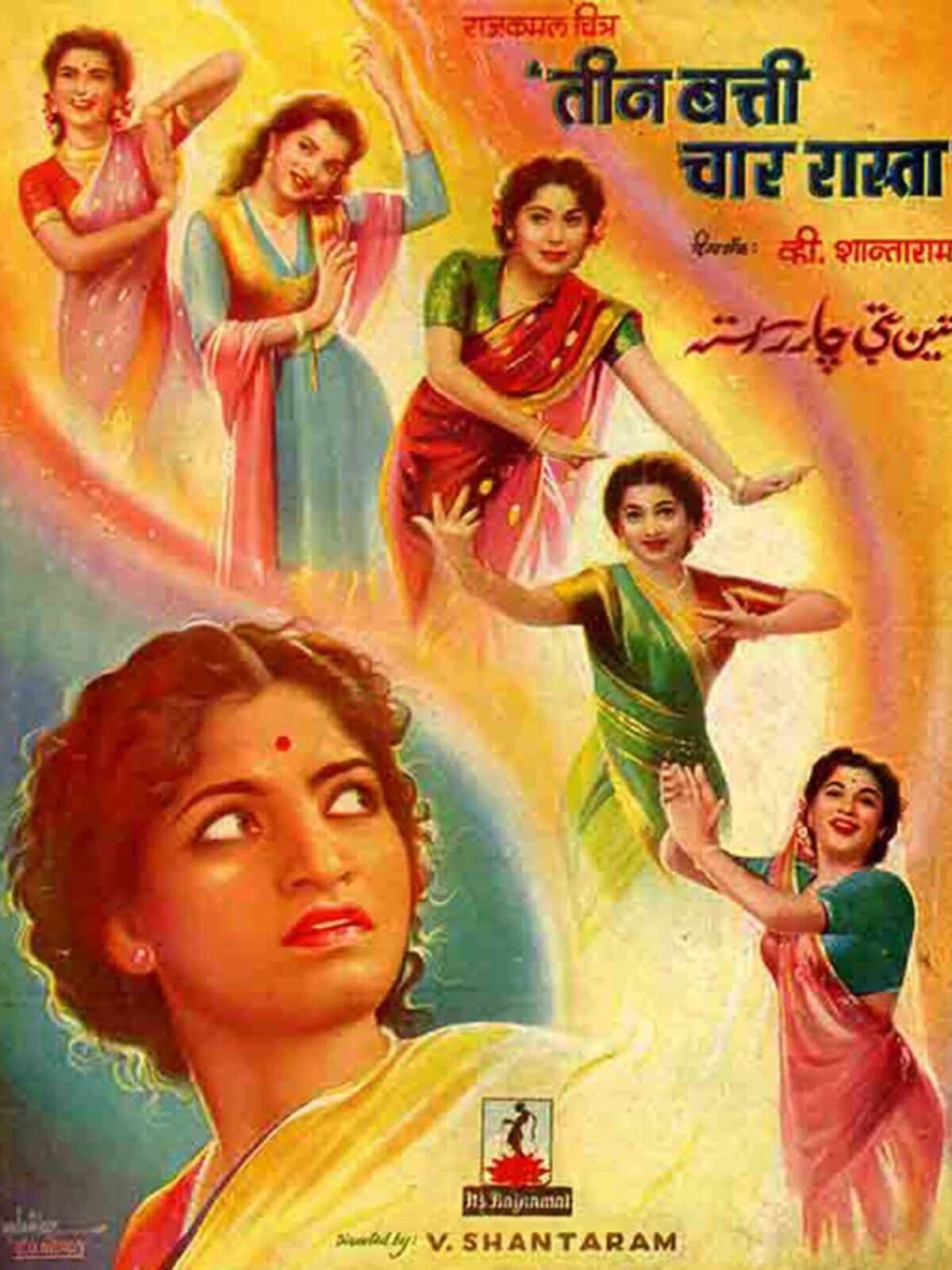
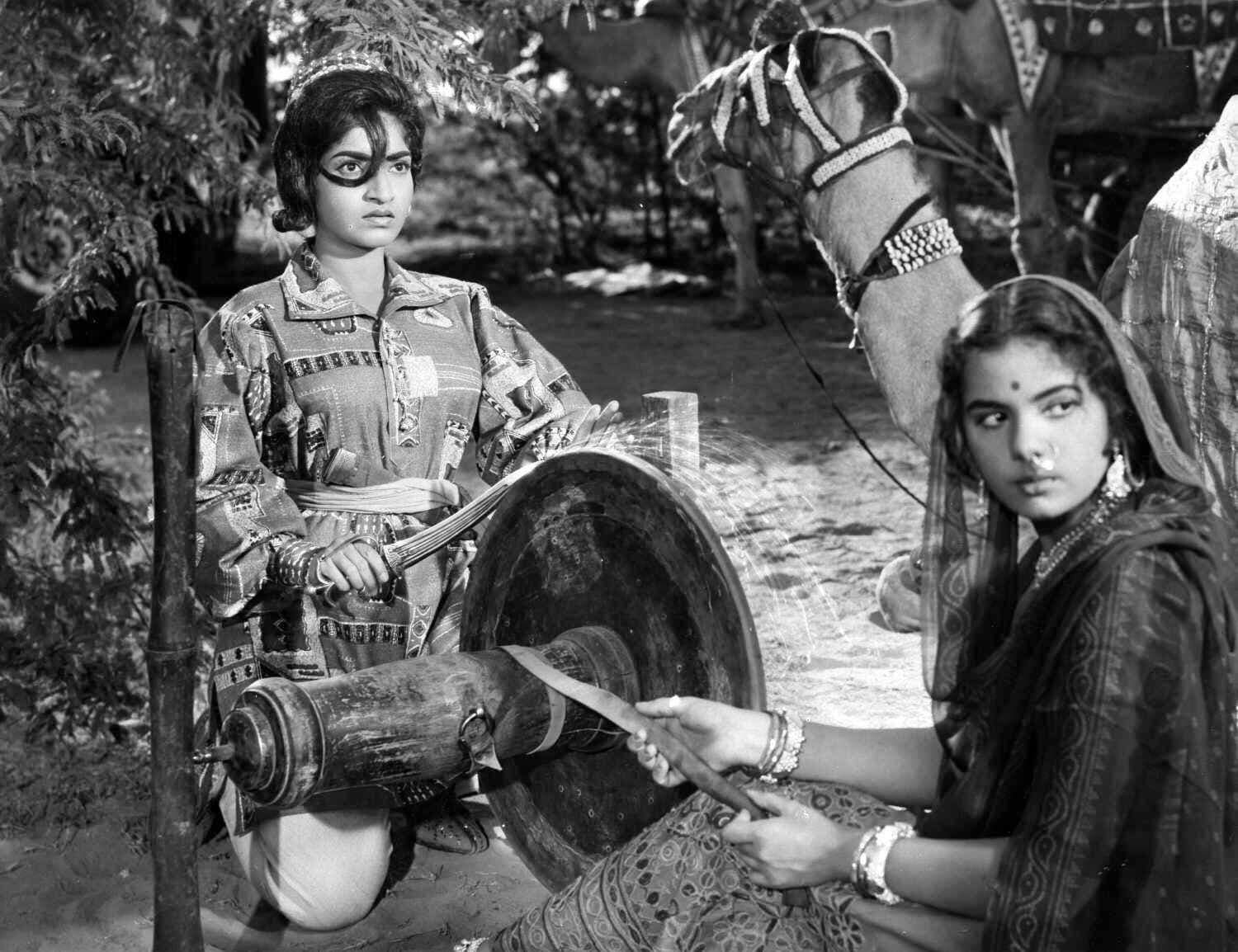
The first lesson of colour television was therefore perhaps the tyranny of ‘pancake’, the thick lightening studio makeup that actresses, not least Sandhya, had been smothered in since the black-and-white era — a high-contrast aesthetic that carried over into colour. So it was all the more ironic that an American exhibit in 2013 would mistake Sandhya for ‘the only dark-skinned actress of her time.’ The Colourism Project, a Houston-based media-literacy exhibit about the cultural bias of ‘fair is beautiful’, used a cutout from Shantaram’s Sehra (1963), noting, ‘Her skin does not appear dark here due to the lighting, and dark room colour correction to allow for limitations of black and white printing.’ A baffling inference, since she was not remotely ‘dark-skinned’ in the actual film. At most, unlike her other films, where she was paled out on screen so much that her own complexion became impossible to parse, in Sehra, she is largely without the usual pancake, as the tomboyish Angara who frequently passes as a male tribesman, dappled in the sun and desert of Rajasthan. That accidental blip aside, the politics of colour surfaces more pointedly if unwittingly in another Shantaram-Sandhya collaboration, Teen Batti Chaar Rasta (1953), where she plays Shyama, a sharp, capable maid who keeps order in a household of five daughters-in-law, each speaking a different language. As I noted in my Past Forward piece in The Hindu, Sandhya’s styling and deportment here, replete with sari, pigtails, accessories, and on-point expressions, made her a spitting image of a young Lata Mangeshkar. On cue, Shyama doubles as the beloved radio singer Kokila, and Sandhya’s performance has a natural felicity well before she slid into the mannered excess that defined many of her later roles. The film amplifies Shyama’s supposed ‘plainness’ and working-class antecedents, heightened through deliberately darkened makeup. It’s a dehumanising trope that Indian cinema deploys with startling casualness. In one scene, breathless autograph-seekers refuse to believe she's the celebrated Kokila. |
| | What grounds the conceit is Sandhya’s unforced clarity of performance and a steadiness that keeps Shyama from slipping into cliché. The scion of the household (Karan Dewan), enchanted by her voice (backed by Mangeshkar, of course), first paints her as a pale, idealised Raja Ravi Varma beauty. Then, after much running and singing on staircases that quietly map class hierarchies, he reworks the portrait into something truer to her Lata-like self: composed, gifted, and entirely without the Pygmalion makeover the trope usually demands. This narrative of a woman dismissed as ‘unattractive’ despite an ethereal singing voice would later resurface in Raj Kapoor’s Satyam Shivam Sundaram, a project he had originally envisioned in the 1950s with Mangeshkar herself. It’s a striking overlap between two showmen who operated on parallel tracks, each drawn to the same mid-century archetype. But there was another kind of fluidity running through Sandhya’s work. What feels almost obvious today is how easily her films lend themselves to a queer reading. The ‘colour corrected’ cutout used by the Houston exhibit was from the Sehra hit, 'Pankh Hoti Tu Ud Aati Re ', in which Sandhya ‘plays the boy’ opposite a young Mumtaz, who’s a kind of proto-ally who never begrudges Angara her quasi-masculine presentation. The film is full of such nuggets of acceptance. Angara stays in her preferred guise, and while elders fret, others (including the leading man) accept the gender play without question, capturing how comfortably Sandhya occupies ambiguity on screen. It’s only at the halfway mark, when she bows to her dying mother’s wishes, that this persona is reined in and she’s reoriented into the mould of a conventional heroine. |
In Navrang, her androgynous, hyper-stylised creature serves as a muse to Diwakar (Mahipal), a sort of volatile, feminised male artist, rebuffed by his cold, withholding wife (also played by Sandhya). The camp voltage of these sequences is unmistakable. Shantaram’s cinema, for all its reputation for social uplift, is riddled with this camp visual exuberance that Indian mainstream cinema has never known how to admit about itself. And Sandhya was a shape-shifter who could be man, woman, muse, mirage, and mischief-maker in the space of a single cut. |
All of this sits inside an admittedly niche orbit. All the films mentioned in this piece are Shantaram’s, and outside his films, Sandhya never really travelled — she wasn’t viewed as a trained dancer, nor embraced as a conventional actress. Her native extravagance was often seen as a limitation rather than a gift, and as my own viewing habits grew more ‘serious’, even I, who was dazzled by her as a child, found myself growing uncertain about where to place her. For Shantaram, though, Sandhya’s rawness was the catalyst that let his colour-era imagination run riot, even if it sometimes kept the films from soaring in ways a more polished performer might have allowed. There were, of course, diminishing returns. Sandhya’s nimble-footed presence in films like Do Aankhen Barah Haath (1957) devolved slowly into the hallucinatory Jal Bin Machhli Nritya Bin Bijlee (1971), in which she ends up dancing along with a goldfish writhing on the ground. Part of this is due to the way Hindi cinema trapped actors in fixed personas that hardened over time. Still, in the last two films, Pinjra (1972) and Chandanachi Choli Ang Ang Jali (1975), in which she returned to the tamasha landscape she knew instinctively, she unexpectedly found a more grounded register within its folksy flamboyance, and won two Filmfare Awards for Best Actress in Marathi. What’s almost a throwaway postscript is the recent announcement of the new Shantaram biopic, which highlighted Siddhant Chaturvedi’s casting as Shantaram, and came with the tidy promise of featuring ‘all three wives.’ While that in itself doesn’t indicate how the film will frame Sandhya, she was the undisputed axis around which the last quarter-century of his cinema spun. The twelve-odd films that rounded out his oeuvre didn’t just cast her; they reoriented themselves around her rhythms, her oddities, her stubborn, untrained brilliance. It would certainly be a mistake to shrink that legacy into a footnote. |
Like what you read? Read more of what you like: Subscribe to our (free) newsletters , visit the website or download the app, and follow @ottplayapp on Twitter , Facebook and Instagram . We'd love to hear from you! Know someone who'd love this newsletter? Forward this email, or use the share buttons below! |
| | This weekly newsletter compiles a list of the latest (and most important) reviews from OTTplay so you can figure what to watch or ditch over the weekend ahead. |
| Each week, our editors pick one long-form, writerly piece that they think is worthy of your attention, and dice it into easily digestible bits for you to mull over |
| The one newsletter you need to decide what to watch on any given day. Our editors pick a show, movie, or theme for you from everything that’s streaming on OTT. |
| | Hindustan Media Ventures Limited,
Hindustan Times House, 18-20,
Second Floor, Kasturba Gandhi
Marg, New Delhi - 110 001, India |
| | INSTALL THE OTTPLAY TV APP |
| | If you need any guidance or support along the way, please send an email to ottplay@htmedialabs.com . We’re here to help! |
©️2025 OTTplay, HT Media Labs. All rights reserved. |
| | |