I talked to the great Tom Nichols this week on The Bulwark Goes to Hollywood about Kathryn Bigelow’s nuclear war movie, A House of Dynamite. We did some of the “What x gets wrong/right about y” chatter and dug into how Tom’s students back in his Naval War College days reacted to nuclear panic movies like The Day After and Threads. We also chatted about the Trump administration’s nuclear posture. Spoiler: He’s not a fan.
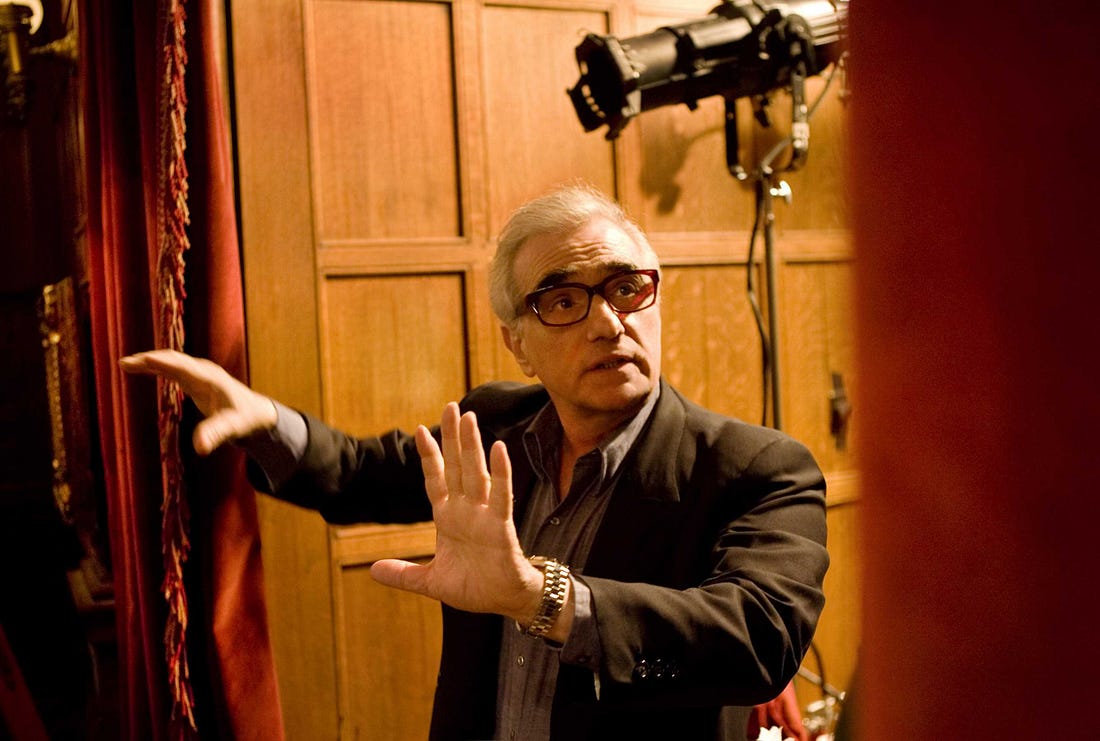
The new documentary on AppleTV+, Mr. Scorsese, is a must-watch if you’re a fan of the man’s movies. From Mean Streets to Taxi Driver to Goodfellas to Shutter Island to The Irishman, it covers the full scope and sweep of his career. Great interviews with editor Thelma Schoonmaker, screenwriters Paul Schrader and Nicholas Pileggi, and actors Robert De Niro and Leonardo DiCaprio—almost inarguably Scorsese’s five most important collaborators over the six decades of his career. Nice color from Steven Spielberg, Brian DePalma, Jay Cocks, and others. Wonderful archival footage. Director Rebecca Miller has put together an invaluable document about, perhaps, the greatest filmmaker of his era. In it, you’ll learn a great deal about Scorsese’s life and the way his faith has influenced his work and how family drama inserted itself into the stories he told. But I think there’s something much more interesting at work than any of the interpersonal drama at the heart of the documentary. Scorsese’s career serves as a tremendously useful synecdoche for the business of Hollywood and the film industry writ large over the last eighty-some years. For instance, early in the series we learn that, due to Scorsese’s boyhood asthma, he spent a ton of time in movie theaters because the air conditioning made them the only reliable place to escape the heat. Thus, he fell in love with the medium—maybe it would have happened anyway, who knows—because of a technological quirk only incidental to the art form itself. (It’s the same quirk that got John Dillinger killed, oddly enough.) Similarly, Scorsese first watched the films of the Italian Neorealists in his home on TV surrounded by immigrants and the children of immigrants and their children. Television brought the films to his family and showed him what they could be, how personal they could be, how community-oriented they could be. Then he was off to college, where he was among the first of the film-school set, learning the tricks of the trade at NYU before heading west to Los Angeles. And it was in Los Angeles that the clash between art and commerce would first rear its head. He made a film for Roger Corman, Boxcar Bertha, that is considered a minor classic now but at the time was seen by his friends (and, importantly, his mentor, John Cassavetes) as a waste of time, as beneath him. So he made Mean Streets because, and this is important, this was the sort of era in which you could make a movie like Mean Streets. He found himself amid the New Hollywood being erected by his friends Steven Spielberg and Francis Ford Coppola and George Lucas and Brian DePalma and John Milius and made movies that somehow managed to straddle the Venn Diagram of personally compelling, critically acclaimed, and commercially successful. Some hits, some misses, and then the business changed. Scorsese had to go small with After Hours, show he could handle a budget by making a sequel, The Color of Money. And then in rode a new savior: Michael Ovitz, king of the package deal and a man willing to lose a bunch of someone else’s money if it meant landing a big client. Ovitz signed Scorsese with the promise of getting The Last Temptation of Christ made before bundling together a string of Scorsese–De Niro hits: Goodfellas, Cape Fear, Casino. That vein eventually played out, and all of a sudden a new one was struck: Leonardo DiCaprio, a guy whose overseas appeal could get things greenlit. For their first partnership, Scorsese crossed off another longtime bucket-list movie (Gangs of New York). They’d make a bunch of movies together, the best of which was the independently financed The Wolf of Wall Street, a movie that came together solely on the strength of DiCaprio’s fundraising. And Scorsese wanted to keep going and to keep going bigger. For this, he needed the streamers, bringing him to the most recent stage of his career: The Irishman for Netflix and Killers of the Flower Moon for AppleTV+. These are non-commercial projects, nine-figure historical epics that could have used an intermission. They were only ever going to be made by a company that didn’t mind trading money for artistic credibility. Throughout Scorsese’s career, you get the sense of filmmaking as a compulsion. Go back to that first real movie: He couldn’t understand why his indie-minded colleagues are so put out by his work with Corman—he just wanted to make movies. From asthmatic kid in the cool air to film school brat to indie darling to industry titan to streaming normalizer, Scorsese has embodied the dominance of filmmaking on the cultural imagination in a way that nearly no one else has. I fear to think what it will mean when he leaves the stage for good. On the Bulwark Movie Club, JVL, Sarah, and I discussed Rounders, a movie all of us love for various reasons. I don’t mean to sound overly dramatic, but you’ll probably learn more about the psyche of Sarah and me on this episode than in anything else you’ll ever listen to on this website? I dunno, maybe not. But things get personally insightful! Give it a watch: 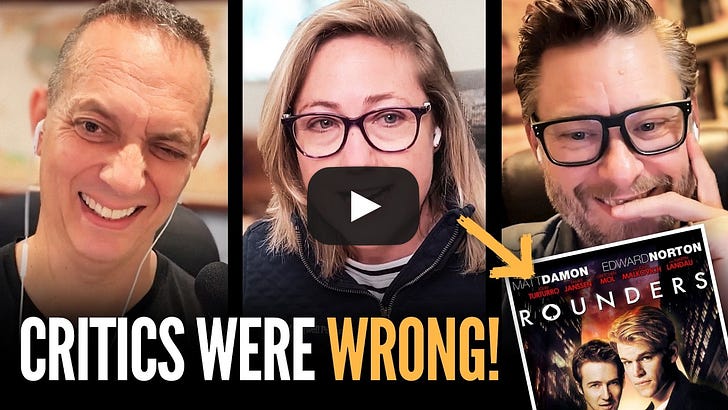 There’s an ad-free version of this video for Bulwark+ members here. Join now, kill the ads! Bugonia Review
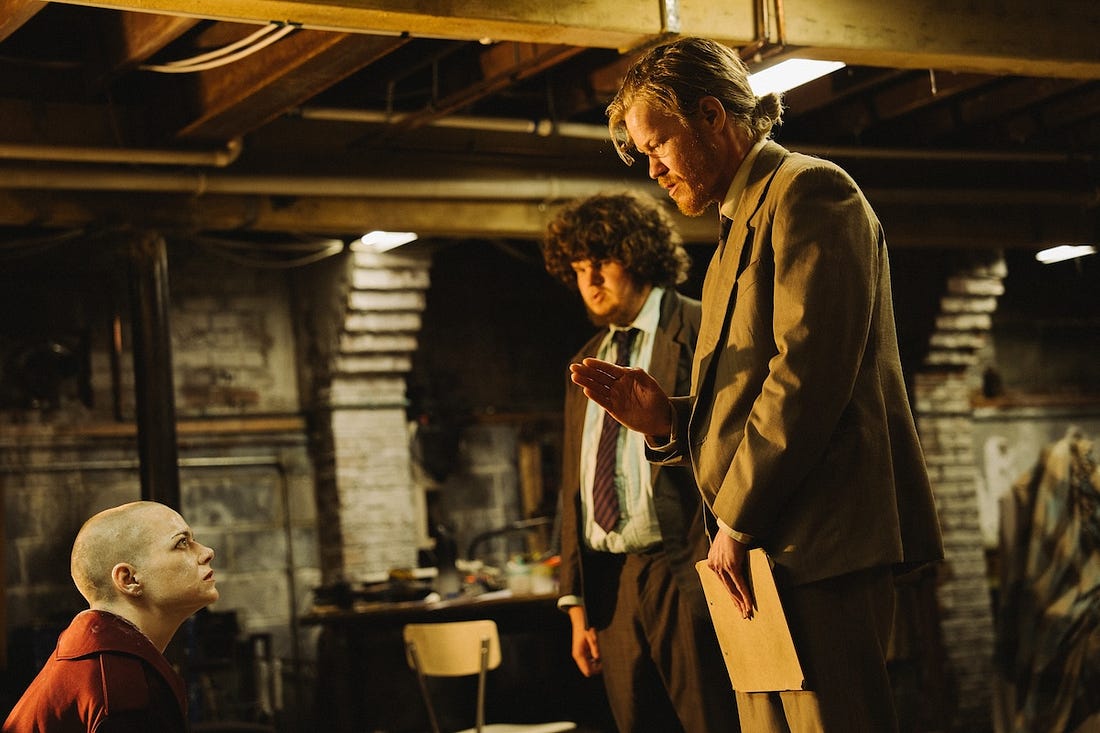
My review of Bugonia is one of those that will likely spark a few emails asking me if I actually liked the dang thing or not. For the record: I did. It’s probably my favorite of Yorgos Lanthimos’s movies, though I’m much more mixed on the director than most of my compatriots. And it’s a fascinating entry into the current cinema’s effort to grapple with why we’ve all gone a little insane these last few years:
You can read the whole thing here. On Across the Movie Aisle this week, we debated the insanity of Paramount being the only reasonable purchaser of Warner Bros.–Discovery because the Ellison-backed company is the only one that could clear regulatory review by the Trump administration. This is no way to run an industry or a country! And on the bonus episode things got … weird. And probably kinda-sorta-definitely NSFW. Don’t listen without headphones. Assigned Viewing: Halloween (Shudder/AMC)
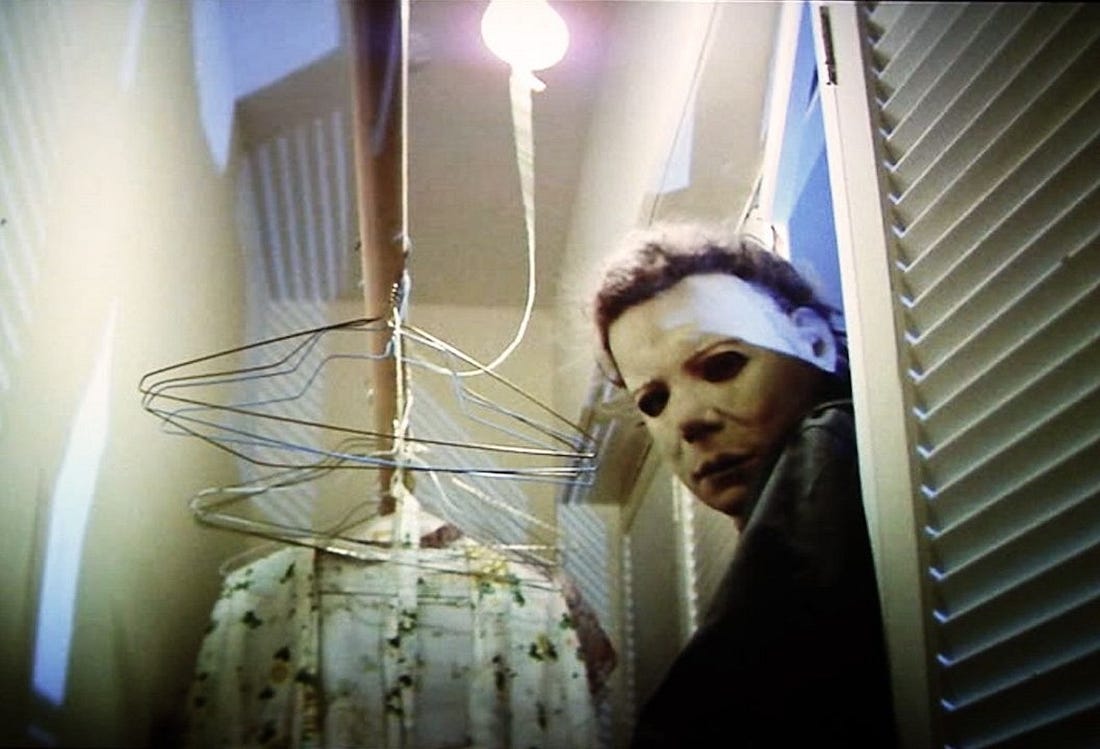
I’m going to be very basic and just assign the movie named after today. There’s some debate over whether or not it counts as the original “slasher” but Halloween is pretty obviously the film that set the template for every major franchise to follow. And it’s a tight, nasty little movie with some great camera work in the early going. That tracking shot following Michael as a kid entering the house is just amazing stuff, particularly for a no-budget flick like this. I try to watch it every year. Maybe I’ll squeeze it in tonight after the kids go to bed. You’re a free subscriber to The Bulwark—the largest pro-democracy news and analysis bundle on Substack. For unfettered access to all our newsletters and to access ad-free and member-only shows, become a paying subscriber.We’re going to send you a lot of content—newsletters and alerts for shows so you can read and watch on your schedule. Don’t care for so much email? You can update your personal email preferences as often as you like. To update the list of newsletter or alerts you received from The Bulwark, click here. Having trouble with something related to your account? Check out our constantly-updated FAQ, which likely has an answer for you.
|