Red Cloaks, White Lies: Hulu’s The Handmaid’s Tale Betrays Margaret Atwood’s Feminist Vision | Hailed as feminist TV, Hulu’s The Handmaid’s Tale strays from Atwood’s critique by idealising white motherhood and reinforcing the very hierarchies it seeks to expose.
Dr Roberta Garrett writes.
| HULU'S television adaptation of Margaret Atwood’s landmark 1985 feminist novel, The Handmaid’s Tale , has now come to an end.
The series focused on female oppression within the imagined future religio-fascist state of Gilead. So, in light of the Donald Trump-led Republican party’s infringements on the reproductive rights of women, it seems appropriate that the first series launched in 2017, a year after Trump was elected, and the final series aired shortly after his current tenure began.
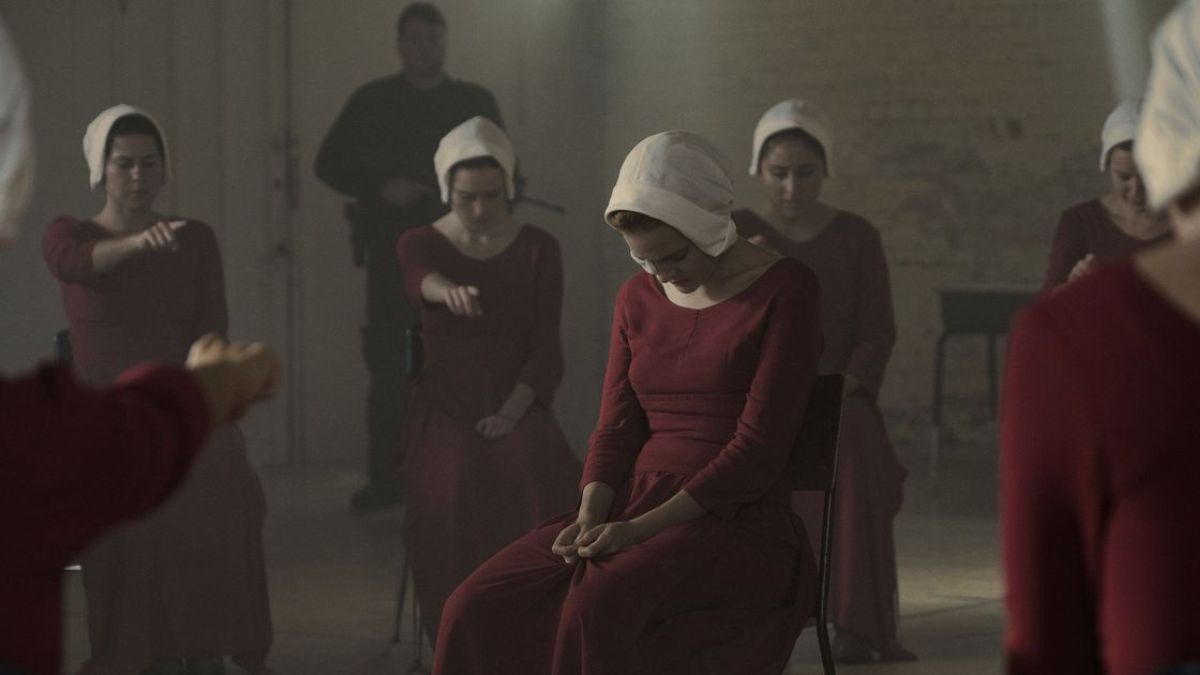
Following Trump’s first election, the iconography of the handmaids’ costumes – hooded scarlet cloaks and white bonnets – were adopted as symbols of resistance at women’s rights protests around the world. Stream the latest documentaries, films and shows with OTTplay Premium's Jhakaas monthly pack, for only Rs 249. The adaptation has been a popular and critical success. However, as I argue in The Routledge Handbook of Motherhood on Screen , despite its strong association with women’s protest movements, Hulu’s adaptation misrepresents the themes of Atwood’s biting feminist dystopia. In fact, it reinforces certain attitudes that Atwood, and other feminist writers and thinkers, have been criticising for decades.
In particular, the series idealises white biological mothers, while demonising or marginalising other female figures. Here are three examples of how it does this. | 1. Childless women are bitter spinsters or wicked stepmothers Atwood’s novel focuses chiefly on the horror of the rape and forced impregnation of the handmaids. But Hulu’s adaptation gives more weight to the theme of maternal loss and the handmaids’ desire to keep their biological offspring.
The characters of the television show evolve over six series. This means they require extended character arcs, backstories and more emphasis on psychology than the novel. Hulu’s adaptation evolved into a dark maternal melodrama, where the moral worth of female characters is tied to their ability to bear children.
Like a traditional fairy tale, the adaptation depicts infertile women, older spinsters and adoptive mothers in an overwhelmingly negative light. They are frequently shown to be unfit mothers, or cruel women.
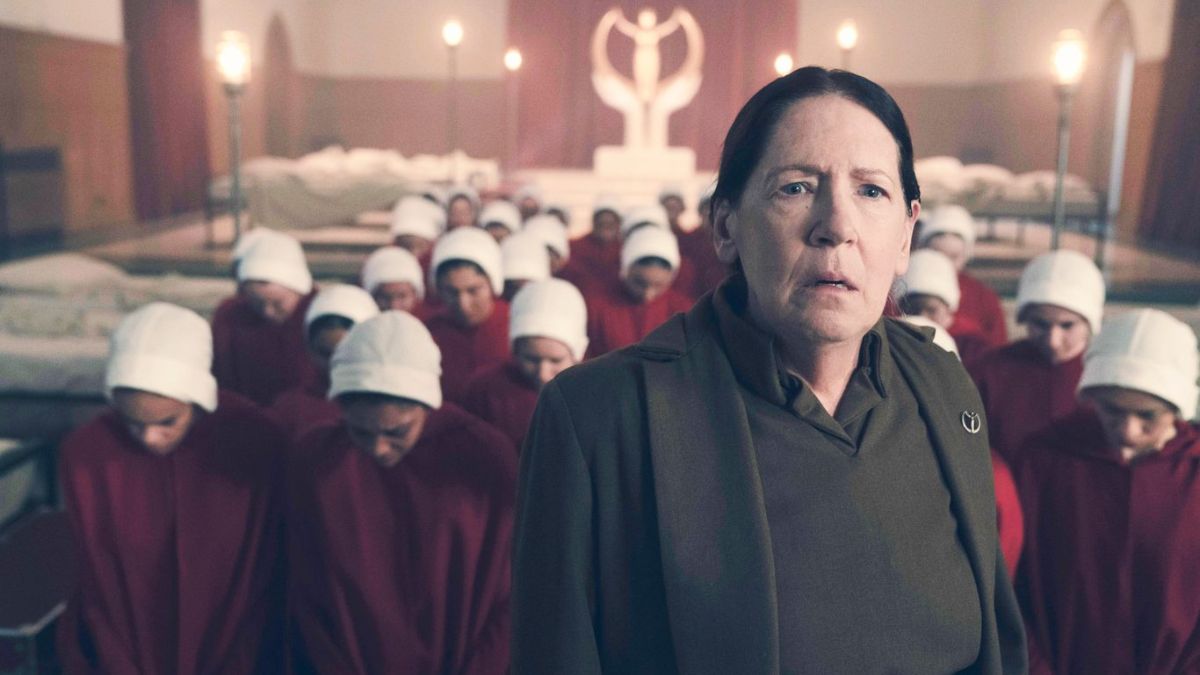
Atwood’s novel uses relatively flat characterisation in order to accentuate Gilead’s authoritarian structure, rather than individual psychology or motivations. In contrast, Hulu’s The Handmaid’s Tale develops the character of Aunt Lydia (one of the older, childless women who train, bully and discipline the handmaids) and Serena Joy (the commander’s wife in the household that June is sent to) as central characters. | Aunt Lydia’s (Ann Dowd) backstory in season three reveals that in her pre-Gilead life, she was a lonely, ageing school teacher who suffers sexual rejection. She responds to this by spitefully removing a child from the care of his loving but overworked young, single mother.
The moral worth attached to fertile and infertile women in the series is even more evident in the treatment of Serena (Yvonne Strahovski). In the novel Serena is an outspoken advocate for traditional female roles. The series takes this further. It shows baby‑crazed Serena actively creating the laws of Gilead – and the handmaid system – to obtain a child. She was apparently made infertile after being shot by a protester during a speaking engagement.
Serena is the series’ chief antagonist throughout the first four seasons. This changes in season five. Now pregnant, Serena finds herself at the mercy of another angry infertile woman who wants to steal her baby. Once pregnant, Serena mellows and becomes a more sympathetic character. This evolution can be seen to reinforce the idea that infertile women are unfulfilled, unhappy women who can only be redeemed through pregnancy and childbirth.
In its overall view, the series presents the spinsterish aunts as sadists who delight in punishing the fertile handmaids, and the infertile commanders’ wives as cold and shallow. Unlike the sisterly handmaids, the latter secretly loathe one another. They appear to only value children as status symbols. | 2. It endorses intensive, ‘natural’ mothering As many feminist critics have pointed out, the model of child-rearing currently favoured by society is “intensive”, and endorses so-called “natural” practices and behaviour (such as unmedicated birth and extended breastfeeding). These place considerable pressure on new mothers.
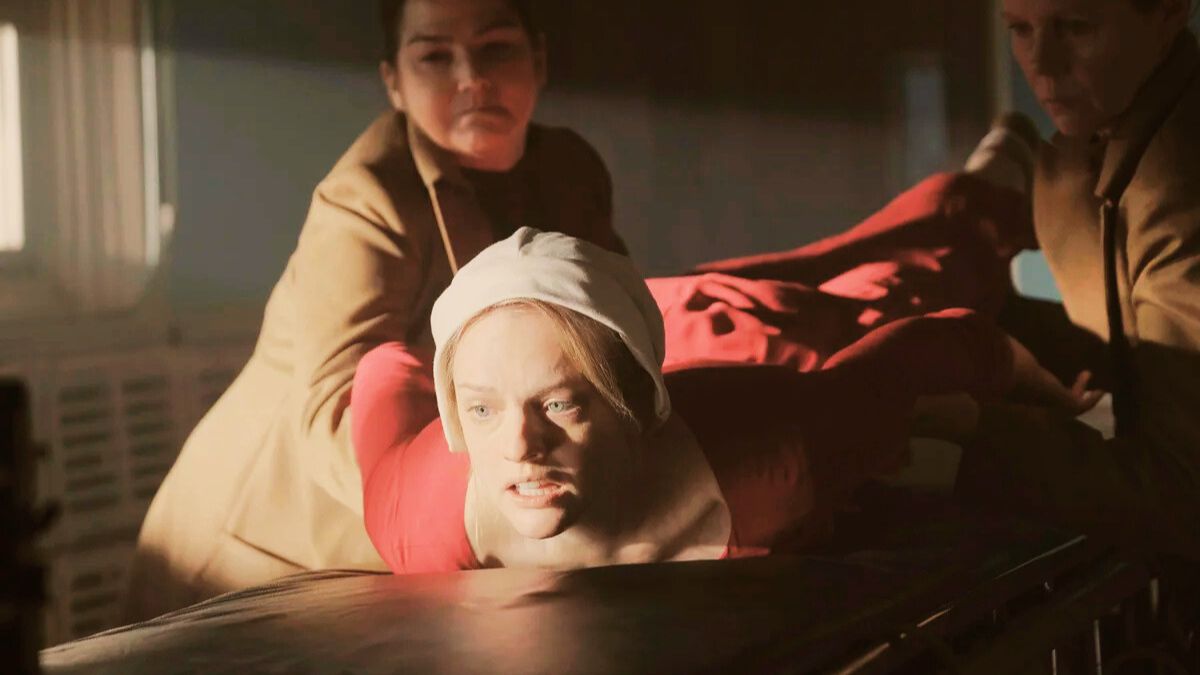
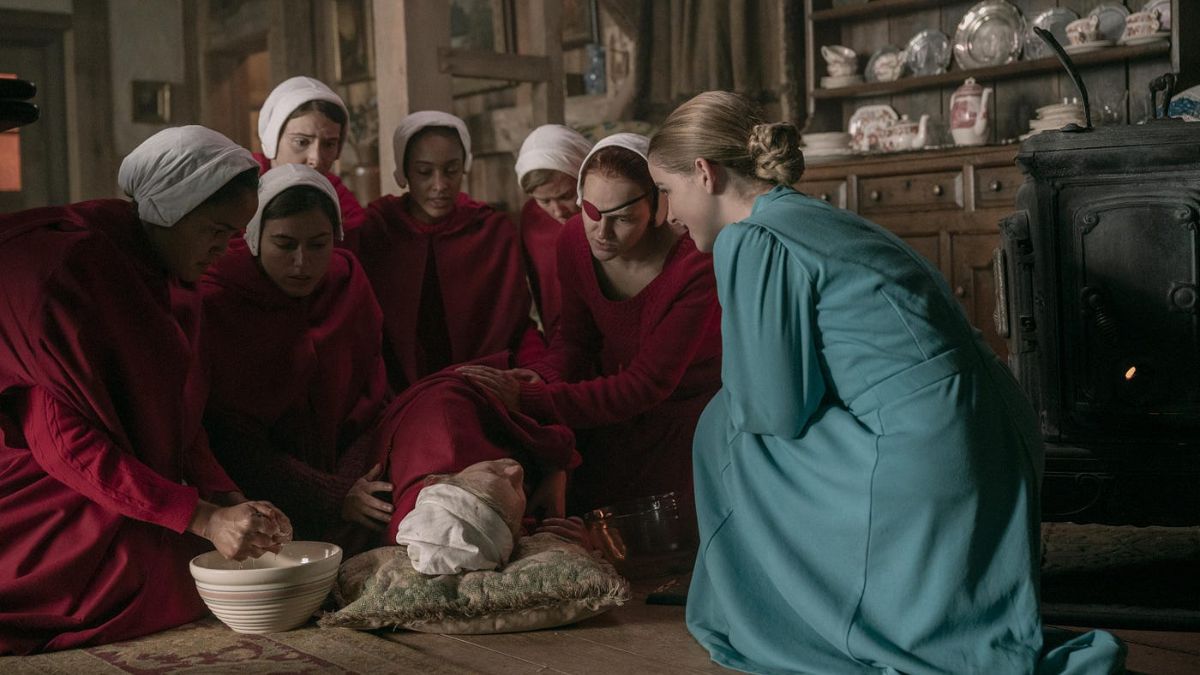
This mode of mothering is displayed by handmaid heroines June (Elisabeth Moss) and Janine (Madeline Brewer). They show no difficulty in bonding with babies produced through rape, breastfeed with ease, have an innate ability to comfort their offspring and – in June’s case – even successfully give birth entirely alone.
In contrast, the adoptive mothers are cack-handed with their babies and quickly resent their maternal duties. This suggests that good mothering is the preserve of biological mothers, to whom it comes naturally. | 3. It consigns black women to side roles Series one to three focuses largely on white handmaids. Although June’s husband (O-T Fagbenle) and best friend Moira (Samira Wiley) are black, they escape to Canada in the first season, so feature only minimally in the drama that follows. Black characters occupy minor roles as servants or nannies (known as “Marthas”), who are readily sacrificed by June in her child-saving crusade.
June casually causes the execution of the Martha who cares for her first daughter by pestering her to allow her to make contact. The Martha pleads with her to stop, but June responds with her usual maternal piety: “You know I can’t stop.” As the audience barely knows the Martha, their sympathies are directed towards June. Her desire to see her daughter is presented as a legitimate reason to endanger the life of a black non-mother.
Only Rita (Amanda Brugel), the Martha assigned to June’s household, has a consistent, if marginal, onscreen presence. Rita is a key part of the resistance movement, but her role as resistance fighter diminishes when June assumes leadership. As communications professor Meredith Neville-Shepard argues, Rita spends much of the later episodes thanking “white saviour” June for facilitating her escape to Canada.
For these reasons, although The Handmaid’s Tale succeeds as a compelling female-centered drama, unlike Atwood’s novel, it foregrounds the rights of biological mothers over the issue of women’s reproductive choice. While Atwood criticised forced impregnation, the Hulu show became increasingly invested in an idealised view of white “natural mothers” that is oppressive to many women. Dr Roberta Garrett is Senior Lecturer in Literature and Cultural Studies at the University of East London. This essay originally appeared on The Conversation and has been republished here under the Creative Commons License. | Like what you read? Get more of what you like. Visit the OTTplay website , or download the app to stay up-to-date with news, recommendations and special offers on streaming content. Plus: always get the latest reviews. Sign up for our newsletters. Already a subscriber? Forward this email to a friend, or use the share buttons below. | | | This weekly newsletter compiles a list of the latest (and most important) reviews from OTTplay so you can figure what to watch or ditch over the weekend ahead. | | Each week, our editors pick one long-form, writerly piece that they think it worthy of your attention, and dice it into easily digestible bits for you to mull over. | | In which we invite a scholar of cinema, devotee of the moving image, to write a prose poem dedicated to their poison of choice. Expect to spend an
hour on this. | | | Hindustan Media Ventures Limited,
Hindustan Times House, 18-20,
Second Floor, Kasturba Gandhi
Marg, New Delhi - 110 001, India | | | If you need any guidance or support along the way, please send an email to ottplay@htmedialabs.com . We’re here to help! | ©️2025 OTTplay, HT Media Labs. All rights reserved. | | | |